A work order circulating by text message, a timesheet filled out on Friday, photos on a technician's phone, and an invoice prepared from memory: these are not just minor irritants. They represent lost information, billing delays, and margins that are harder to protect. A customizable software for SMEs is primarily used to bring these elements back into the same file, at the moment the work is being done.
For an excavation company, this file might be a work order. For a property manager, it will be a service ticket. For an agency or a technical services firm, it may take the form of a mandate or a project. The name changes, but the need remains the same: everyone must know what to do, what has been done, and what can be billed.
Why generic software often ends up slowing down teams
SMEs are not short on tools. They often have accounting software, spreadsheets, a messaging app, a file storage system, and sometimes a time-tracking application. The problem arises between these tools. Information entered in the field must be copied at the office. A change made by the project manager does not always reach the technician. An expense is forgotten before the invoice is sent.
Generic software can be suitable when operations are simple and identical from one file to another. But as soon as a team needs to follow procedures, allocate resources, attach photos, obtain customer approval, or manage materials, the standard flow shows its limits. The company then ends up adapting its methods to the software, rather than the other way around.
This adaptation has a cost. Teams create workarounds, keep parallel lists, and constantly ask for clarification. The manager, meanwhile, loses the big picture: which jobs are pending, which hours are not yet validated, which interventions are ready to be billed?
Customizable software does not mean you have to develop an entire application from scratch. It means the system can reflect your work document, your steps, your mandatory fields, your statuses, and your validation rules. Your methods are unique; your software should be too.
What a customizable software for SMEs should track
The right starting point is not a list of features. It is the actual journey of a file, from the customer's request to payment. Take a recent example and follow it step by step: how is the request received, who prepares the quote, who plans the work, what data must be captured in the field, and who gives the green light for billing?
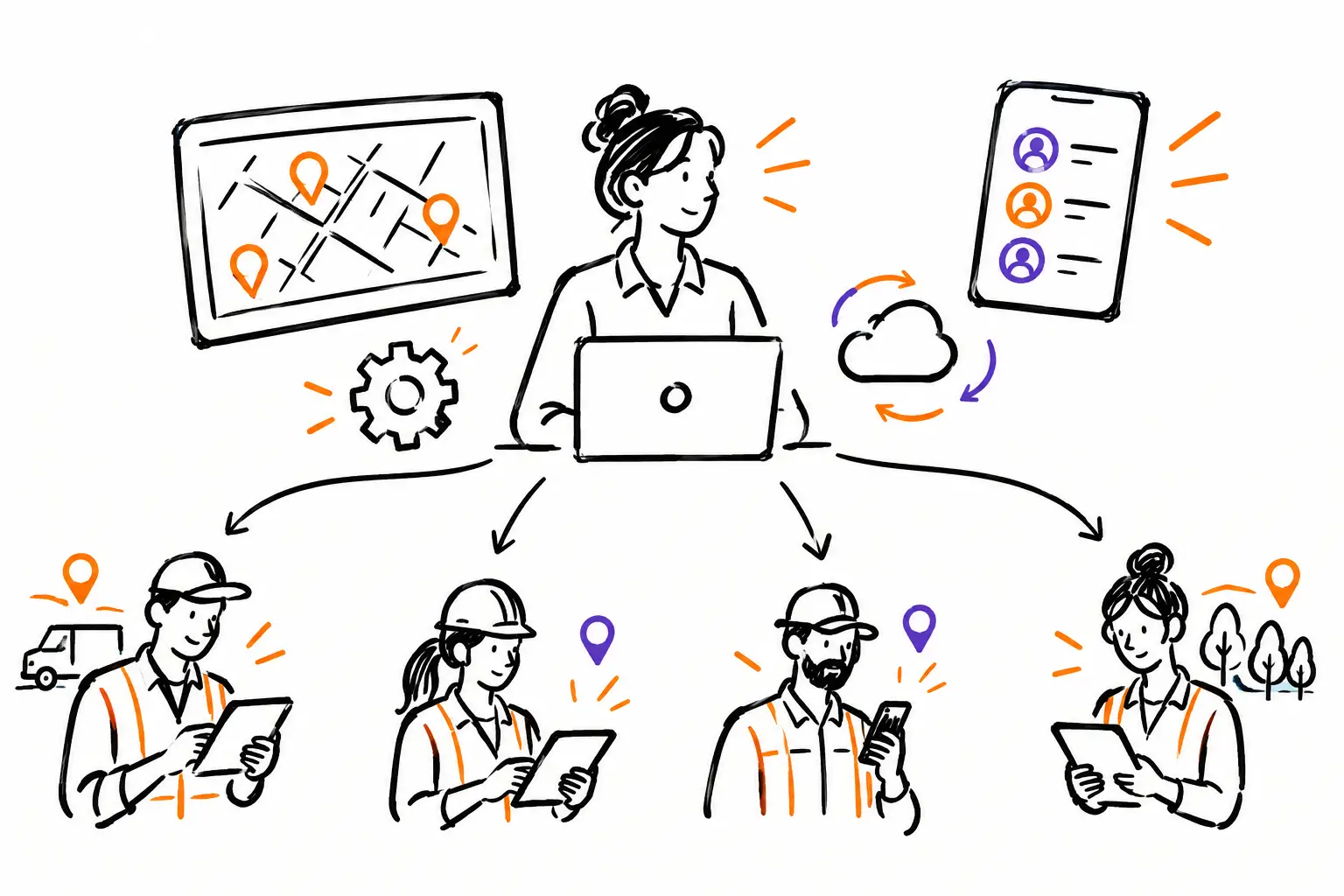
In a well-equipped company, the file becomes the common point of reference. It groups together customer contact details, work description, tasks, assigned people, documents, communications, hours, and expenses. When the technician adds a photo or completes a step, the office sees it without having to ask them to transcribe their intervention.
Fields that match your business
A form that is too general forces teams to write important details in a free note, or not to record them at all. Conversely, adapted fields allow you to capture useful data without slowing down execution.
A contractor may need to enter the type of soil, equipment used, and materials installed. A maintenance company may need the unit number, meter reading, and customer signature. A specialized workshop will want to track parts, inspections, and time per operation. This information must appear at the right time in the file, not in a separate file that no one checks in the field.
However, customization must remain reasonable. Adding twenty fields to a work order does not necessarily make the team more rigorous. Keep what is used to execute, control, or bill the work. The rest can often remain in a procedure or reference document.
Statuses that show the real situation
"Open" and "closed" are not always enough. Between the two, there is often a quote to prepare, an approval to obtain, an intervention planned, work in progress, internal validation, and an invoice to issue.
Statuses configured according to your way of working make bottlenecks visible. If ten files remain at the "waiting for parts" status, the problem is clear. If completed work never reaches the "ready to bill" status, the administrative manager can intervene before the end of the month.
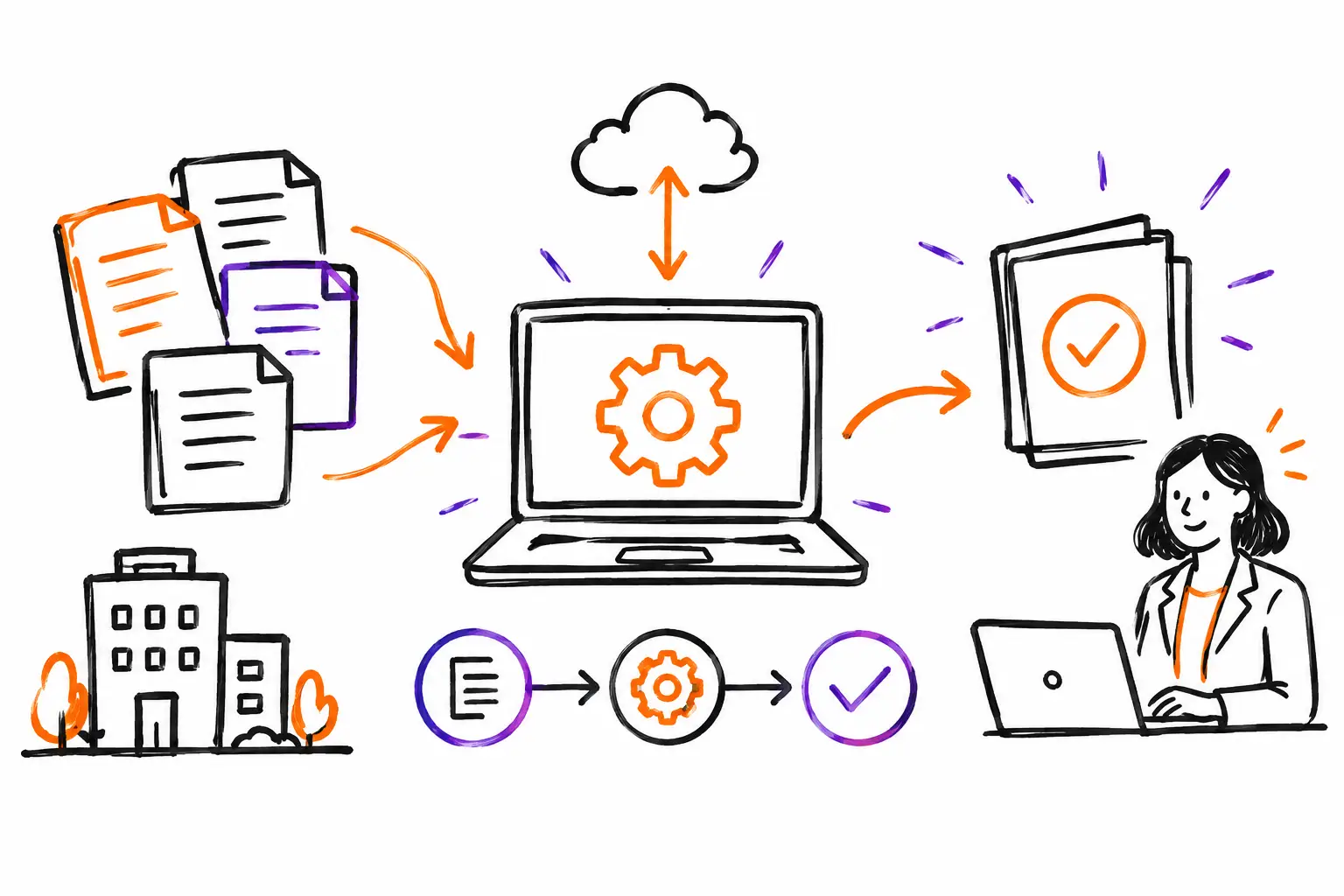
The status should also trigger useful actions. When a mandate is approved, it can create a work document. When the field team completes this document, it can notify the coordinator. After validation, hours, materials, and expenses can be transferred to the invoice. The goal is not to automate for the sake of automating: it is to avoid incomplete handoffs.
Mobile usage that respects the field
Software solves nothing if it forces a technician to wait until they are back at the office to enter their work. On mobile, the team must be able to view their interventions, complete the required steps, take photos, record their time, and report an unforeseen event.
Simplicity counts more than visual effects. A cluttered screen and endless forms will be bypassed. A good configuration gives each role what they need: the technician executes and documents, the coordinator plans and verifies, the administration prepares the billing. Everyone works on the same file, but not necessarily with the same view.
The scenario that changes profitability: from quote to invoice
The value of software appears when data follows the work instead of starting over at each step. Let's take a service mandate. The office prepares a quote with the planned work, rates, and estimated materials. Once accepted, this information is used to create the work order.
In the field, the team consults the instructions, indicates the hours actually worked, adds the materials used, and attaches photos of the result. If the customer requests an addition, the project manager documents it directly in the file rather than leaving it in an isolated conversation.
Upon return, the manager does not have to reconstruct the intervention. They validate the entered elements, compare the actual to the estimated, and prepare the invoice based on the work performed. Less re-entry means fewer errors, but also an invoice sent faster. For an SME, this delay directly affects cash flow.
This path also provides a better reading of variances. If a category of mandates regularly exceeds the planned hours, the manager can review their pricing, planning, or work method. Without reliable data entered throughout operations, this discussion too often relies on impressions.
How to choose without buying another problem
Before comparing platforms, gather the people who actually use the files: someone from the field, a coordinator, an administrative manager, and, if possible, the person who prepares the invoices. Ask them to describe a recent file that went poorly. Information loss and double entry will quickly surface.
Next, check the software's ability to adapt to your flow, not just to display your colors or logo. Can you create your own document types? Modify fields? Define statuses? Associate tasks, photos, expenses, and signatures with the same file? Control who can see or approve what?
Integration also counts. An SME does not always benefit from replacing its accounting software or specialized tools. The right choice must be able to fit into your environment and prevent data from being entered twice. Depending on your context, a simple integration can be more useful than a long list of unused features.
Finally, evaluate the support. Customization requires decisions: which fields to keep, which statuses to create, which validations to make mandatory? A vendor that understands SME operations can help structure the system without imposing a rigid model. At Sequentia, this logic starts from the company's business document, whether it is a ticket, a mandate, a project, or a work order.
Start with a flow that hurts
You don't need to transform the entire company in one week. Start with the flow that costs the most time or money: work orders that come back incomplete, hours that are difficult to recover, forgotten expenses, or invoices waiting for field information.
Configure this path, have a small team try it, and observe what blocks. If a piece of data is never entered, ask yourself if it is really useful or if it arrives too late in the process. If the office still has to call the technicians, identify the missing information in the file.
Good customizable software does not ask you to work like everyone else. It helps you circulate your work with enough structure so that each intervention is tracked, validated, and billed while it is still fresh in the team's memory.