A work order closed on Friday, a timesheet received on Monday, an expense found in an email on Wednesday, and then an invoice sent the following week: this is often how revenue is lost in service companies. Invoicing software for service companies must do better. It must link the work performed in the field to the invoice, without asking the office to reconstruct the history of every intervention.
For an SME in construction, maintenance, technical services, or property management, invoicing is not just an administrative task. It is the final link in a chain that begins with a quote, a mandate, a ticket, or a work order. If this chain is broken, forgotten hours, unadded parts, and missing validations become payment delays—or revenue that will never be billed.
Invoicing software must start from the actual work
A standard invoicing tool allows you to create a customer, add lines, and send a PDF. This is useful, but insufficient when multiple people are involved in delivering a service. The technician records their hours in an app, the project manager tracks progress in a spreadsheet, the assistant searches for photos in their messages, and accounting then enters the same data into their system.
The problem is not the invoice itself. The problem is everything that happens before it.
In a service company, every invoice should be able to quickly answer four questions: what work was requested, who did it, how much time and resources were used, and who confirmed the completion of the mandate? If the answers are scattered across texts, Excel sheets, calls, and paper forms, invoicing becomes slow and difficult to justify to the client.
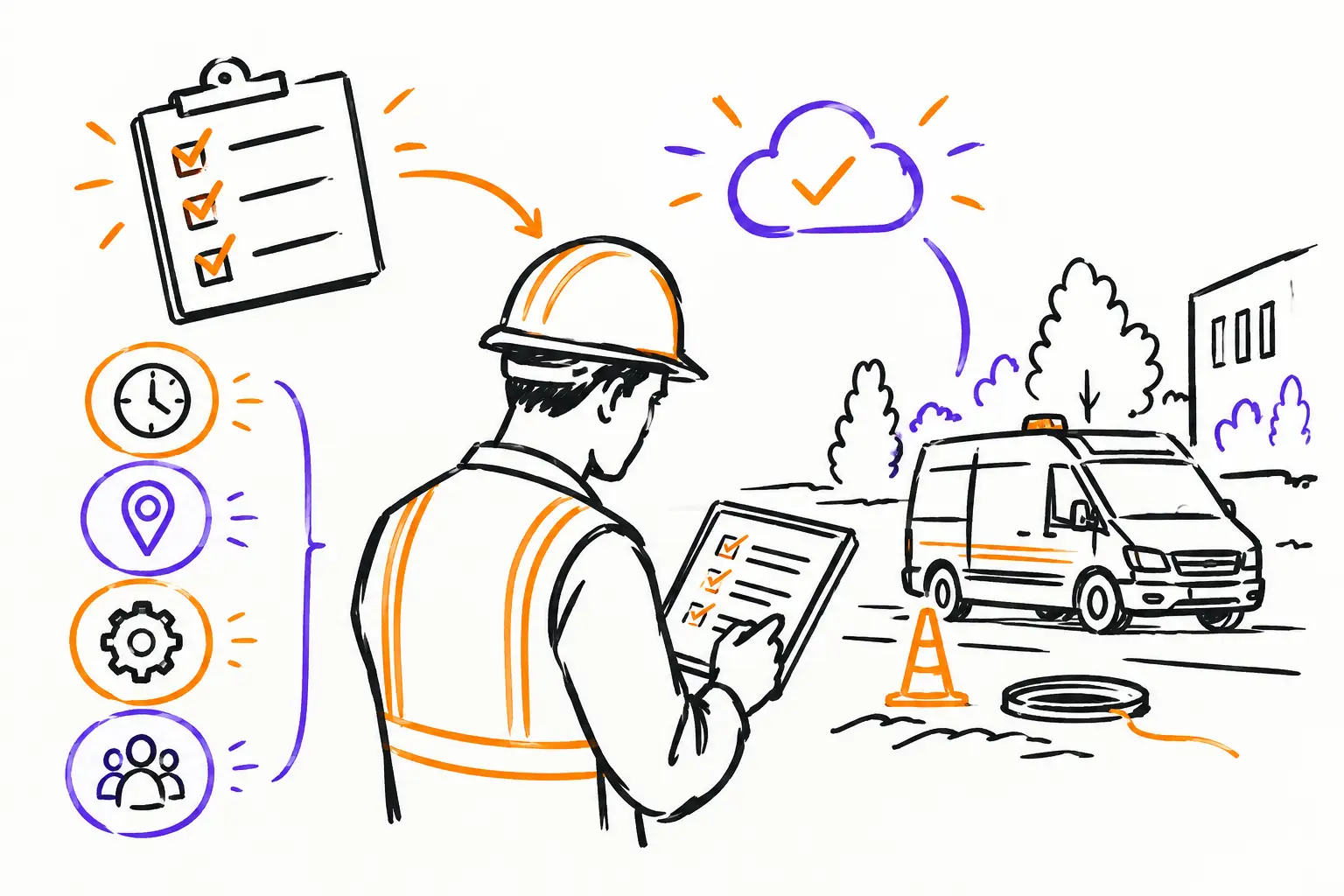
The right software therefore starts with the business document that organizes your work. Depending on your reality, this could be a work order, a maintenance mandate, a service ticket, a project file, or an emergency intervention. It is in this document that the team must be able to plan tasks, enter hours, attach photos, add materials, note unforeseen events, and obtain approval.
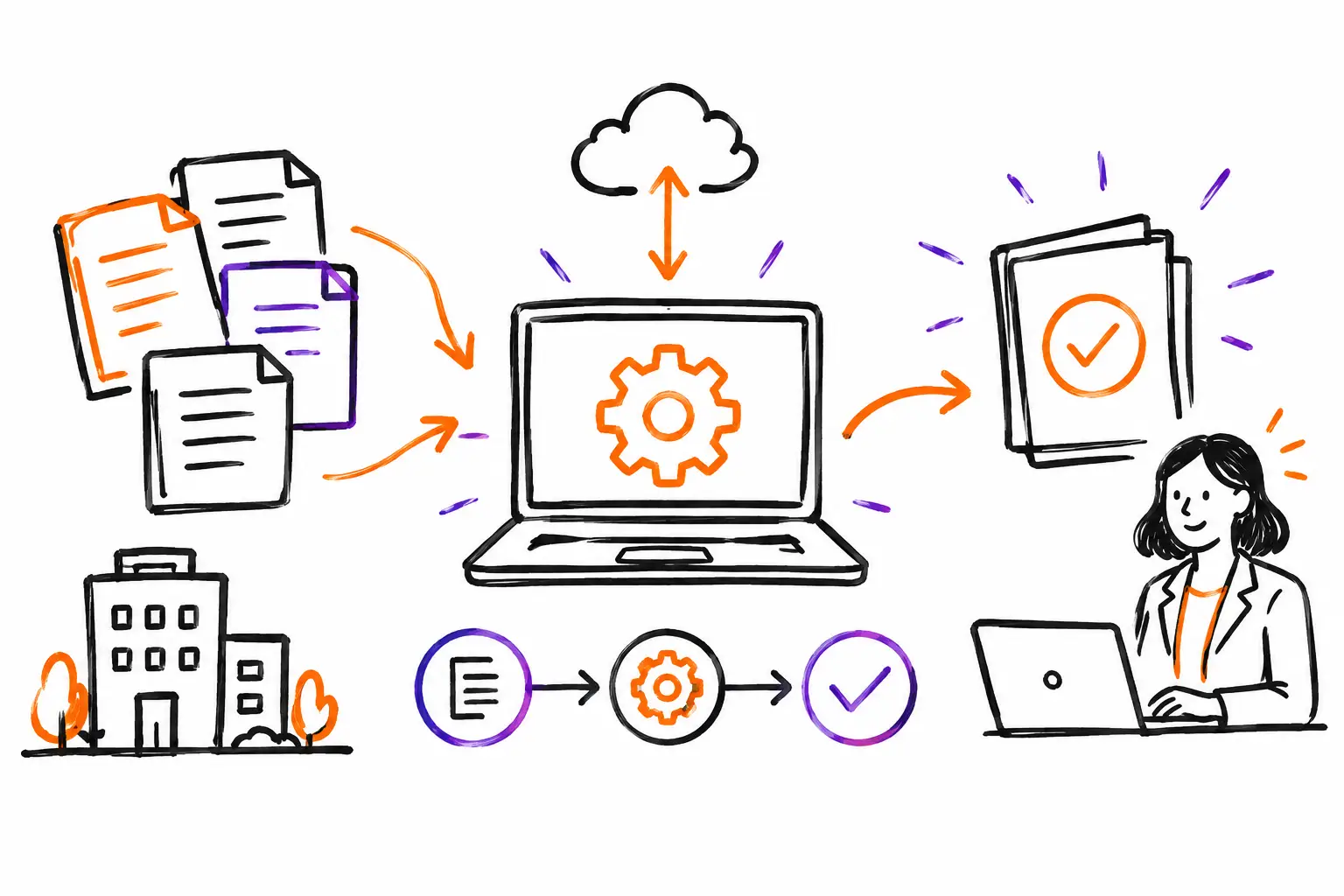
When the file is complete, the invoice should not require re-entry. It should pull from the already validated billable elements.
The target workflow: quote, work, invoice
The most efficient path is simple to describe, but it must respect your internal rules. An accepted quote creates a work document. Teams record what they do there. The manager verifies discrepancies, expenses, and approvals. Once the work is finished, the approved data is ready to be billed.
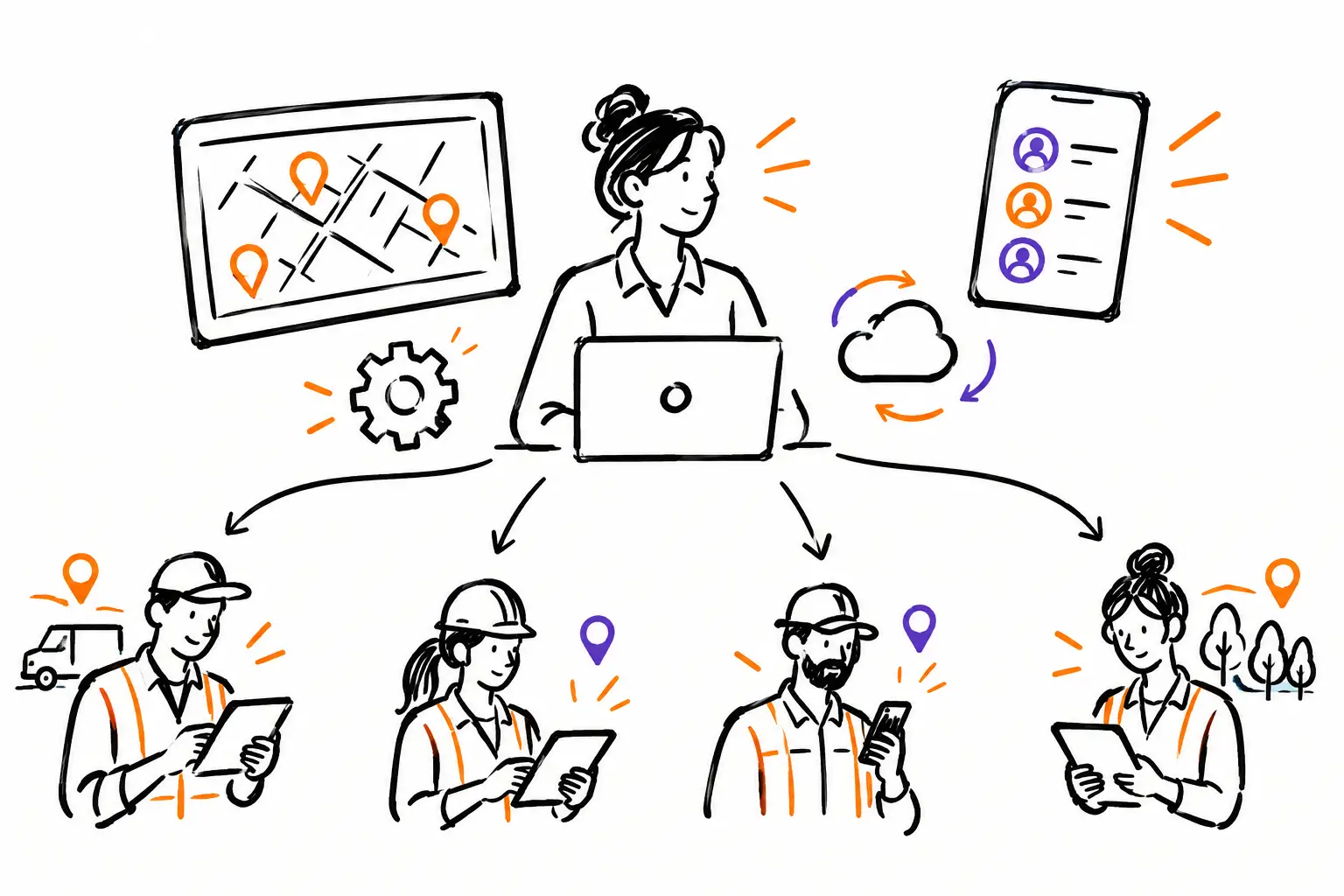
Take an equipment maintenance company. The client accepts a proposal for a preventive visit and repairs as needed. The coordinator assigns the work order to a technician. On-site, the technician consults the procedure, notes their arrival and departure, lists the parts used, adds photos, and requests a client signature.
At the office, the person in charge does not start from a blank page. They see a completed work order, with hours, parts, comments, and validation. They can convert the authorized items into an invoice, verify the amount, and then send it. The client receives an invoice consistent with the service they saw being performed.
This path reduces double entry, but it also reduces unnecessary discussions. When a client questions an invoice line, your team finds the context in the same file: intervention date, photos, entered time, approval, and communications. Invoicing becomes faster because the information is already there, not because the team works faster at the end of the month.
The features that really make a difference
Invoicing software for service companies must cover basic accounting needs: invoice numbers, taxes, payment terms, balance tracking, and data export. However, the most useful features for a field-based company are often found before the invoicing screen.
Hours and expenses attached to the right file
The entered hours must be linked to the right client, the right mandate, and, ideally, the right task. Otherwise, the manager has to guess what is billable. The same logic applies to mileage, meals, subcontractors, materials, and rented equipment.
You must also be able to distinguish what is billable from what is not. Travel time might be included in the agreed price for one client and billed separately for another. A good tool lets you apply these rules without forcing your company to adopt an overly rigid method.
Statuses that prevent billing too early
A "completed" status does not always mean "ready to invoice." A signature, a mandatory photo, a project approval, or the receipt of a supplier invoice might be missing. Steps like "in review," "to be approved," and "ready to invoice" provide real visibility to the office.
These statuses are also useful for the operations manager. They can see blocked files before they become a cash flow problem. An intervention completed ten days ago but never validated deserves a follow-up before the next billing period.
Pricing adapted to your contracts
Not all service companies bill the same way. Some work by the hour, others by flat fee, by unit, based on project progress, or with a combination of these models. The software must be able to represent your actual agreements, including rates per client, emergency fees, marked-up materials, and additional work.
This is a point where you should avoid overly simple promises. Automating an invoice from entered hours is excellent if your rates are stable and your data is well-controlled. For a complex, fixed-price project, a human verification step is often still necessary. The goal is not to automatically bill just anything. It is to prepare an accurate invoice in a few clicks, with all the necessary proof.
A clear connection with accounting
Your operational system and your accounting software do not have the same role. The first tracks work performed. The second tracks accounts receivable, payments, taxes, and financial statements. A company saves time when these tools exchange useful data rather than when each becomes an incomplete copy of the other.
Before choosing, verify exactly what can be synchronized: clients, products and services, invoices, payments, taxes, or accounting categories. Also ask who handles errors and duplicates. An integration is only useful if it avoids re-entry and gives confidence to the people closing the books.
How to choose without buying another tool
A software demonstration should follow a scenario that resembles a real workday for you. Do not settle for seeing an invoice created from a fictional catalog. Have them present the complete path, from client request to payment.
Prepare a specific example: a mandate with two employees, a billable part, an expense, a photo, additional work, and a client approval. You will quickly see if the tool is made for your operations or if it forces your team to circumvent its limitations.
Also ask these questions: can the field team enter information easily on mobile? Can certain fields be made mandatory before closing a work order? Can the manager identify files ready to be billed? Do documents, photos, and exchanges remain attached to the client file? Can you adapt forms, statuses, and rules to your trade?
Configurability is particularly important for SMEs. An excavation company does not work like a production agency, and a specialized workshop does not deliver its mandates like a property maintenance team. Software should support your useful methods while helping you eliminate steps that create no value.
The true indicator: the delay between the end of work and the invoice
Track the number of days between a completed intervention and a sent invoice. This figure often shows the health of your process better than the number of invoices produced per month. If it is high, look for where the information stops: time entry, expense receipt, client validation, internal approval, or transfer to accounting.
With a platform like Sequentia, the work order can become the meeting point between the field, the project manager, and administration. Data is built during the execution of the service, then used to prepare invoicing without asking everyone to recount what was done a second time.
An invoice sent quickly is not just good for cash collection. It confirms to the client that your company tracks its files, masters its interventions, and bills what it actually performs. Start by mapping a single path—from quote to invoice—then eliminate one re-entry at a time.