A work order folded in a van, a timesheet handed in on Friday, and a photo sent via text might be enough... until the moment you need to invoice, respond to a client, or understand what actually happened on a job site. The choice between paper or digital forms is not just about the medium your teams use. It determines the quality of the information flowing between the field, the office, and accounting.
For an SME managing service calls, projects, or mobile teams, the right question is not: "Is paper obsolete?" It is rather: "At what point does our information stop following the work?" This is where digital forms create value.
Paper or digital forms: the real issue
Paper has a quality that many digital tools overlook: it is immediate. You can note a time, have a client sign, or check off an inspection without training, without a network, and without opening an app. In a small team with few documents and stable habits, it can remain effective.
The problem appears after the entry. Someone has to read the handwriting, find the right file, transmit the information to the project manager, verify hours, enter expenses, and prepare the invoice. The paper document does not disappear: it becomes an administrative task. Each handoff adds a risk of oversight, misinterpretation, or delay.
Digital forms are no better if they simply replicate a PDF on a phone. A form that is too long, poorly adapted to the trade, or difficult to fill out in the field will be bypassed. Teams will go back to their paper notes, send messages, or complete the file later. The result is the same: scattered information and delayed billing.
The right tool starts with the document already used by the company. Work orders, inspection reports, service mandates, route sheets, maintenance tickets, or daily reports: each document must reflect how your teams actually perform the work.
What paper costs after the intervention
The cost of paper is not limited to printing, filing, or archiving. It hides in the minutes repeated by several people. Ten minutes to find a work order, five minutes to confirm a part used, twenty minutes to ask the technician for clarification: at the scale of several interventions per week, these delays become a significant burden.
Take a technical maintenance company. A technician visits a client, notes the work done, adds two parts, and has the on-site manager sign. Upon returning, the sheet stays in their vehicle until the end of the week. The assistant must then call the technician to decipher a line, validate the part number, and find out if the intervention is billable.
The client receives their invoice several days later. In the meantime, they may have forgotten the details of the intervention or contested an element that would have been simple to confirm with a photo and a dated signature. The difficulty is not the paper itself. It is the disconnect between the work done and the information available.
A well-structured digital file reduces this disconnect. As soon as the technician finishes their intervention, the work order contains the tasks performed, time entered, photos, parts used, comments, and client validation. The office does not start from scratch. They verify, complete as needed, and invoice based on data already captured.
When digital forms truly change operations
A digital form becomes useful when it serves the next action. An inspection triggers a correction. A completed work order notifies the coordinator. Approved hours feed into payroll or the invoice. An expense added to the file becomes visible before it is forgotten.
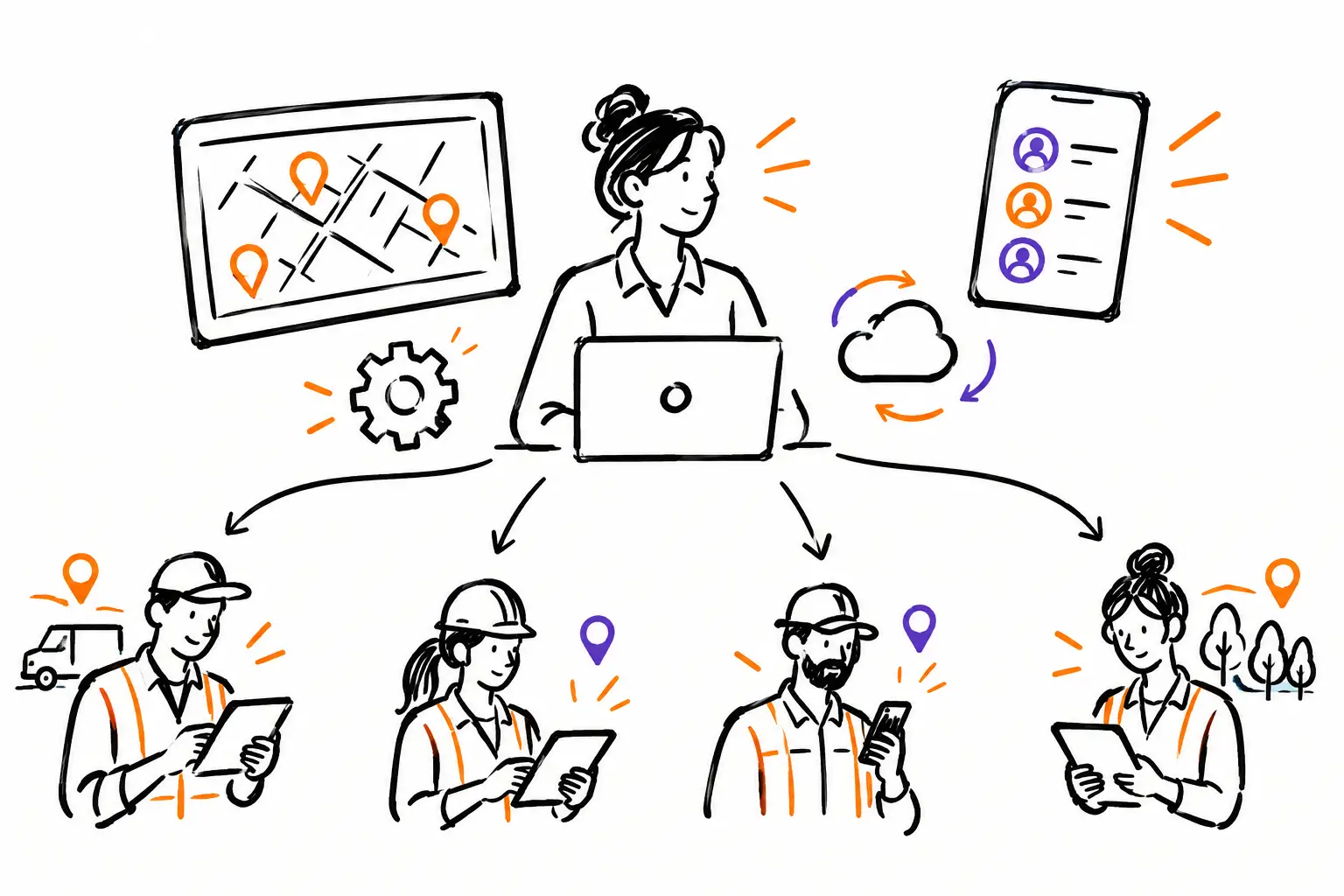
It is this continuity that makes the difference between a simple electronic form and an operational management system. Instead of accumulating files, emails, and screenshots, the company maintains a living work file. Each stakeholder sees the information that concerns them, according to their role and the document status.
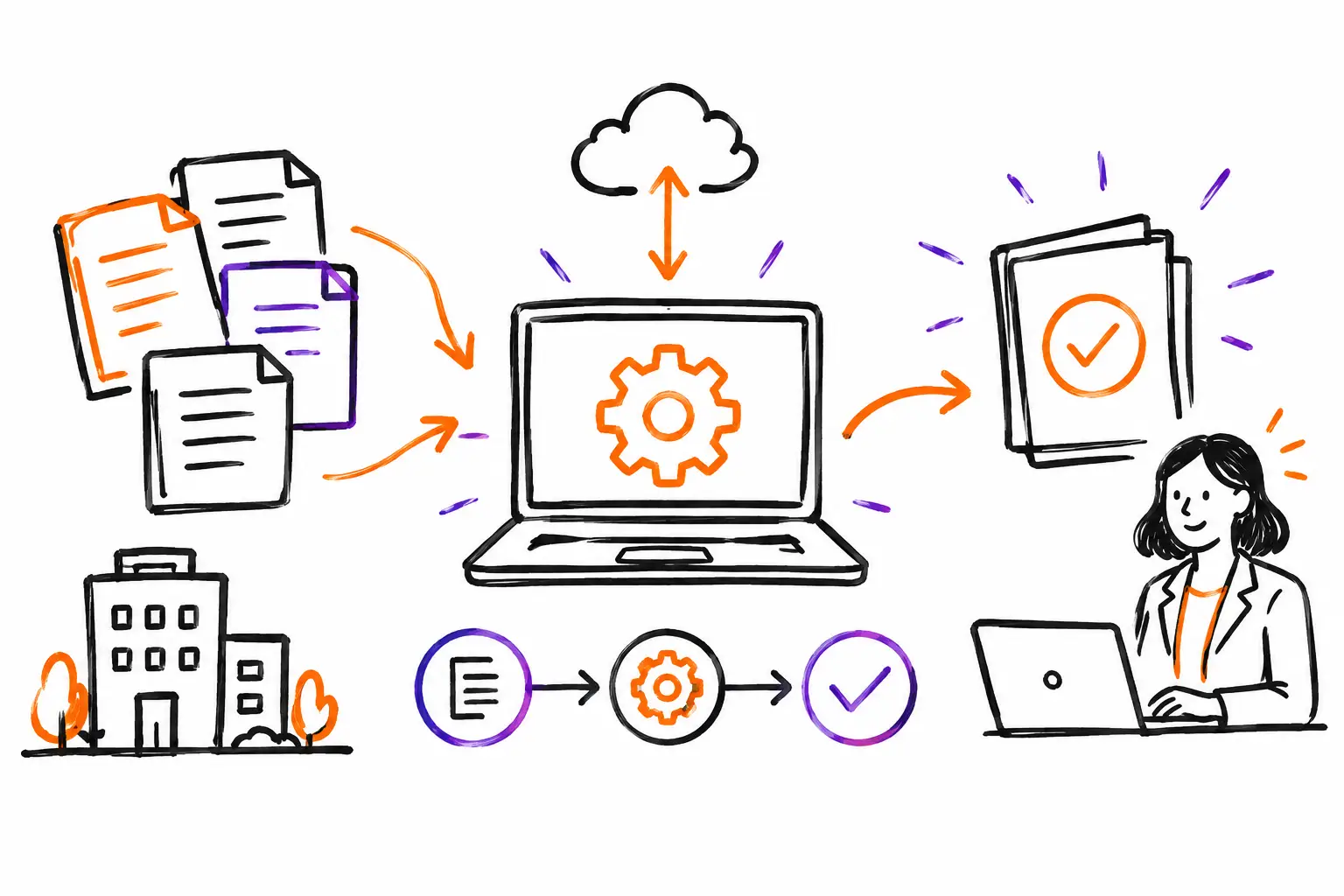
For example, the process can follow a simple logic: an accepted quote creates a work document, teams record tasks and materials, the manager validates execution, and then the office prepares the invoice. Data is not re-entered at every step. It accompanies the work.
This approach also helps managers see real activity. How many interventions are pending? Which work orders are finished but not invoiced? Where do hours exceed the estimate? These answers should not depend on a filing cabinet, a phone call, or the memory of a key person.
Mobility does not mean doing everything on a phone
Some teams fear that a digital shift will force technicians to fill out long reports between service calls. This is a legitimate concern. In the field, an interface must be fast, readable, and adapted to real-world conditions: gloves, weak connection, a waiting client, the next appointment to respect.
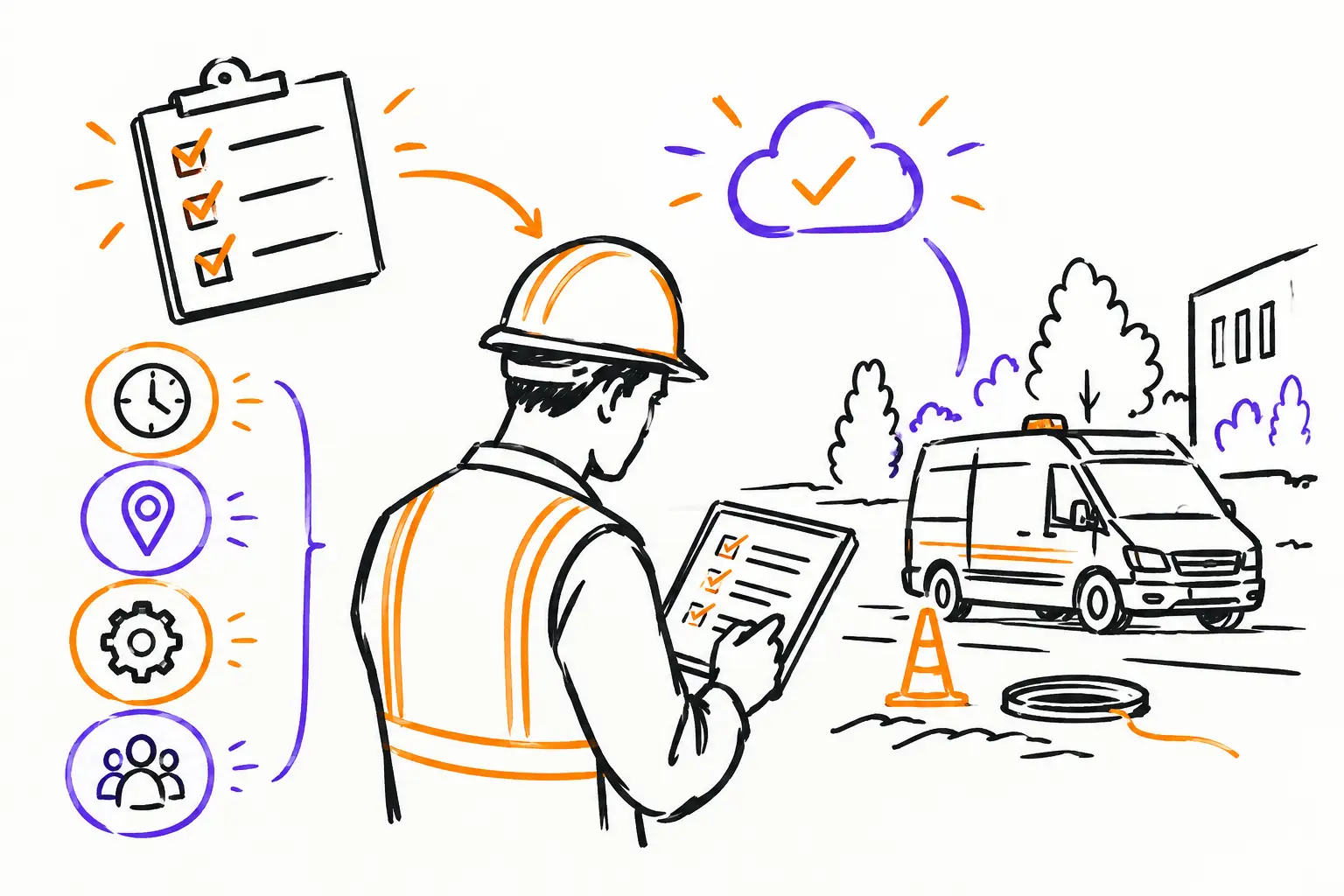
The solution is to distribute data entry intelligently. The technician can check off tasks, add photos, enter their time, and obtain a signature. The project manager can complete more detailed elements at the office. Mandatory fields can be reserved for information that truly protects the quality of the file, not data requested out of habit.
A good form asks few questions, but the right ones. It can also display procedures, safety instructions, or a checklist depending on the type of intervention. The team saves time without losing rigor.
How to decide between paper, digital, or a gradual transition
It is not necessary to digitize all your documents in one week. A transition that is too fast can create resistance, especially if the forms have not been tested with the people who use them. Start with the document that causes the most follow-ups or re-entry: often, the work order or timesheet.
Then observe what happens after it is completed. Who is waiting for this information? What data is reused in a quote, invoice, or report? What attachments are often missing? This diagnosis allows you to design a document that is useful for the field and the office, rather than a form imposed by accounting or management.
Paper can also keep a place in certain cases. A team that works regularly without a network, an emergency form, or a backup procedure deserve a simple solution. But you must clearly plan how the information will return to the digital file and who will be responsible for it. Otherwise, paper becomes a dead zone in your process.
The choice also depends on your volume. With a few interventions per month, the effort of structuring may seem greater than the immediate gain. With several technicians, simultaneous projects, or client documents to validate quickly, the cost of double entry increases fast. At this stage, the question is no longer whether you can live with paper, but how much time your team loses compensating for it.
A form must respect your trade
An excavation company does not work like a production agency. A specialized workshop does not have the same validations as a property management firm. Yet, too many software programs ask SMEs to adopt a generic workflow that corresponds neither to their documents nor their clients.
This is where a configurable approach makes sense. Your statuses, fields, procedures, and validation steps must support your work method. With Sequentia, the business document remains at the center: tasks, photos, time, communications, expenses, and billing information are attached to the same file rather than circulating in separate tools.
The goal is not to do more data entry because the system allows it. It is to capture useful information once, where the work is done, and then use it to coordinate, justify, and invoice.
Before replacing your forms, take a real work order, not an ideal template. Look at what teams write in the margins, what they explain over the phone, and what the office always has to ask for. That is often where the best starting point is found. A well-thought-out digital form does not change your methods for the sake of changing them: it finally gives your team the means to follow them through to the invoice.