A work order left in a truck, a timesheet filled out on Friday for a job done on Monday, an illegible customer signature: these are small incidents that end up costing a lot. Asking why you should digitize paper forms isn't about launching a tech project for the sake of it. It’s about solving a very concrete problem: your team does the work, but the information needed to track, bill, and improve it arrives too late, or not at all.
In an SME in the service, construction, maintenance, or property management sectors, paper forms often serve as the bridge between the field and the office. Work orders, inspection reports, timesheets, material requests, safety forms: each document holds a piece of operational truth. As long as it circulates on paper, that truth remains fragmented, difficult to verify, and slow to use.
Why digitize paper forms in an SME?
Paper seems simple because it requires no connection or training at the start. A technician takes a sheet, checks boxes, notes their hours, and hands it to the office. The problem starts afterward. You have to find the document, decipher the notes, confirm the hours, enter the data into a spreadsheet or accounting software, and then call the team when a photo, approval, or purchase order number is missing.
Digitization isn't just about turning a sheet into a PDF. Scanning forms and filing them in digital folders reduces clutter, but it doesn't solve re-entry or incomplete follow-ups. A truly digitized form becomes an active working document. It guides the person in the field, records what was done, preserves evidence, and fuels the rest of the process.
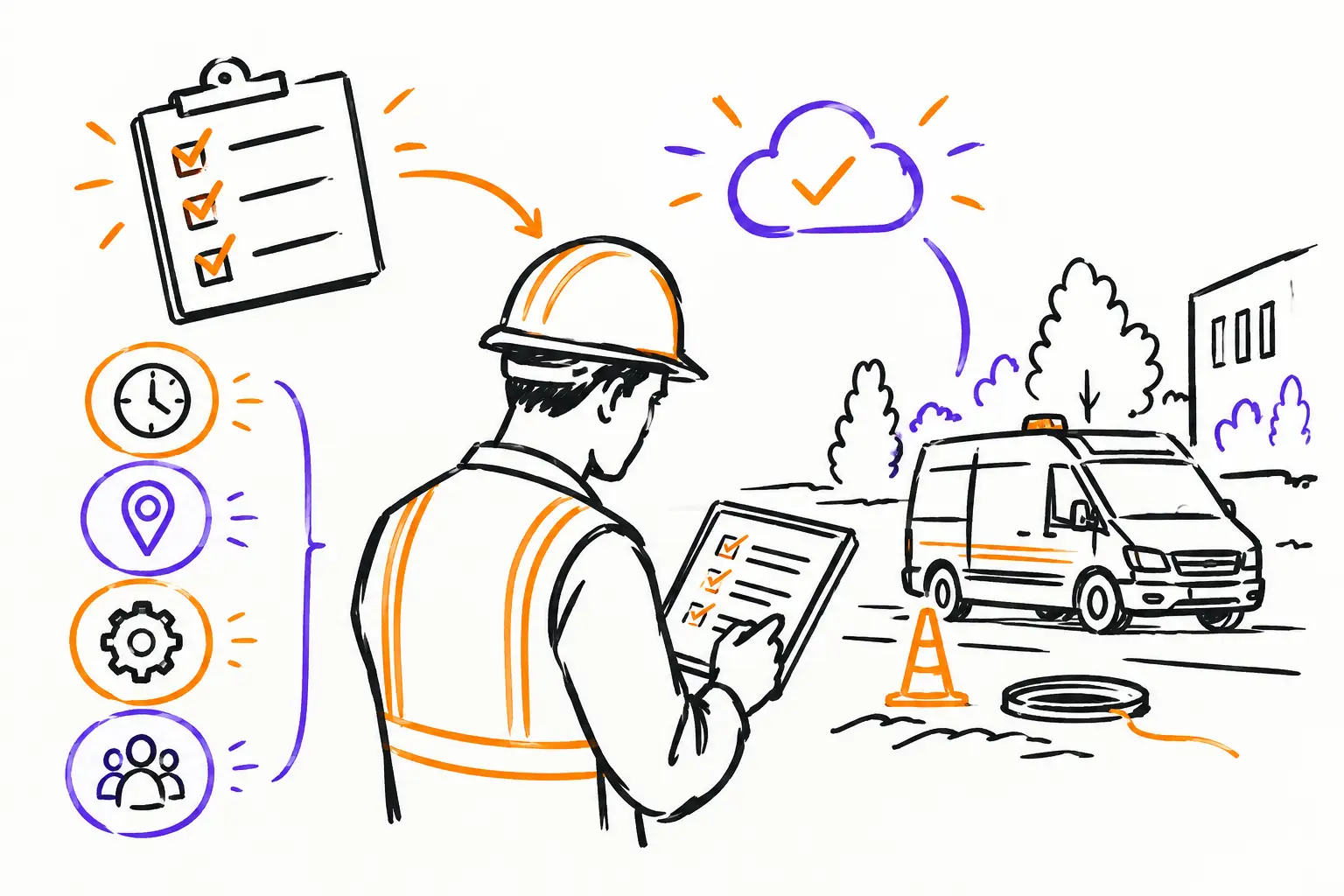
For example, a digital work order can contain the client's address, tasks to be done, safety instructions, before-and-after photos, parts used, time worked, and the customer's signature. As soon as the intervention is finished, the coordinator sees the status. The office no longer waits for a pile of sheets to arrive at the end of the week.
The hidden cost of paper is in the handoffs
The cost of a paper form isn't the printing. It hides in the minutes lost by several people to complete, move, verify, and re-enter the same information. A misfiled sheet can delay an invoice. A forgotten hour can reduce your margin. A photo sent by text, with no link to the work order, becomes difficult to find when a client disputes a service call.
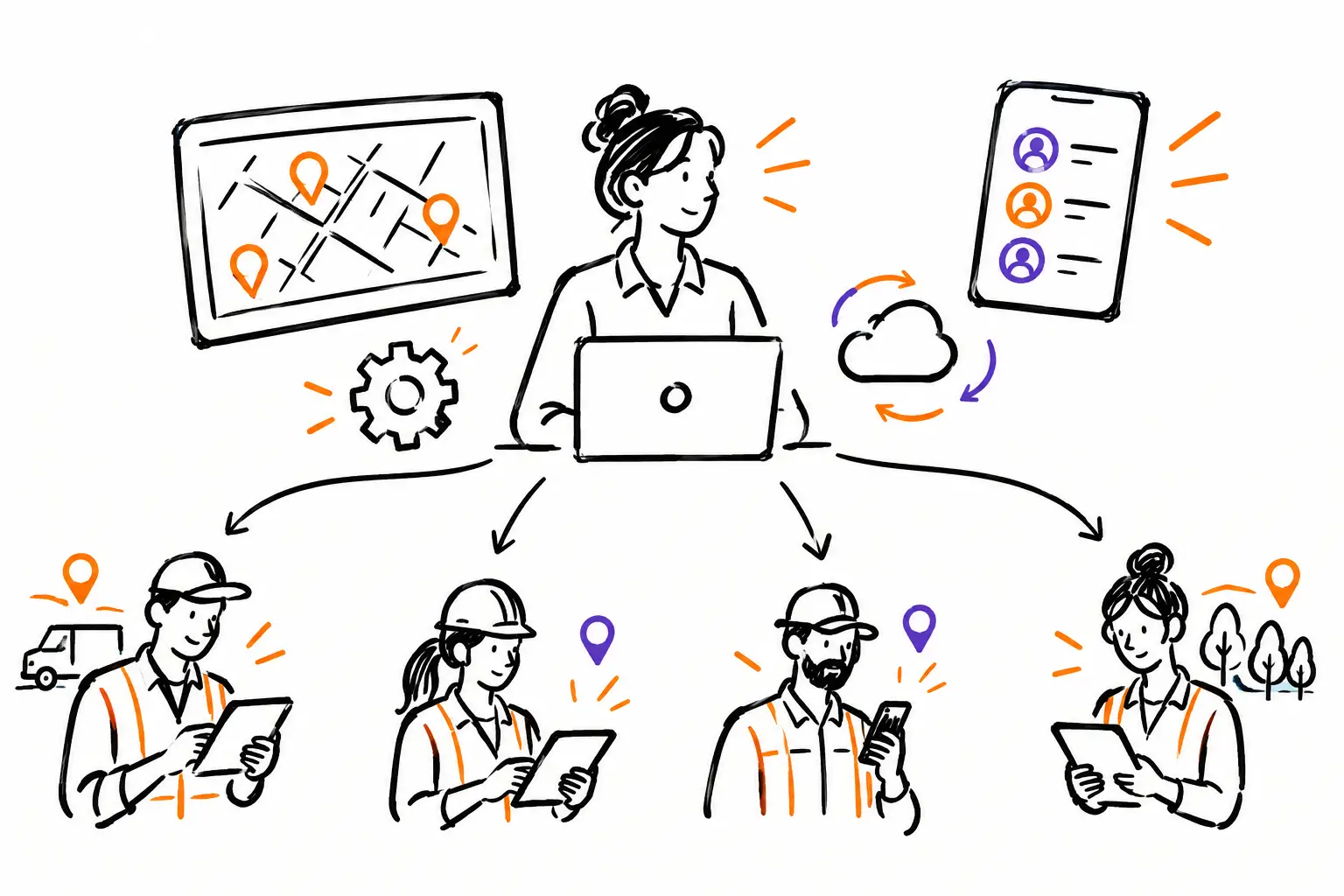
These losses accumulate particularly when teams work in multiple locations. The project manager knows the urgency. The technician knows the work performed. The administrative assistant prepares the invoice. Management wants to know what is profitable. If each person has their own version of the information, the company moves forward with blind spots.
A well-designed digital document reduces these handoffs. The same information is entered once, at the right time, by the person who has it in hand. It remains associated with the client, the mandate, or the project. This change seems simple, but it has a direct effect on three issues that SMEs face every day: speed, traceability, and the ability to bill for what was actually executed.
Hours and expenses that no longer disappear
On paper, hours are often reconstructed after the fact. The team relies on memory, a calendar, text messages, or a sheet filled out quickly before payroll. This method may suffice for a small, stable team. It becomes risky as soon as interventions multiply, employees change sites, or work is billable by time and materials.
With a digital form, hours can be added to the work document during the intervention. Expenses, parts, and mileage can follow the same path. The manager doesn't have to guess if a data point belongs to a quote, an ongoing mandate, or a completed service call.
It’s not about monitoring every move. It’s about having a faithful record of the work performed, early enough to correct an error and complete enough to support an invoice or a discussion with a client.
Evidence that is useful when a question arises
A client asks why a part was replaced. An insurer wants a report. A landlord disputes the date of a visit. In these situations, a scanned sheet without context helps little. You still have to search for the associated emails, photos, and exchanges.
The right digital document gathers these elements in one place. You can see who performed the intervention, when it was started and finished, which tasks were checked, which photos were added, and who validated the result. For regulated work or recurring inspections, this traceability becomes a management foundation, not just protection in case of a dispute.
Digitizing doesn't mean imposing a generic form
This is where many projects fail. A company buys an app, chooses a standard form template, and asks the teams to adapt. However, your methods exist for good reasons. A refrigeration service report doesn't look like a landscaping maintenance sheet. An event production mandate doesn't have the same validations as an excavation work order.
The starting point should be your business document. What information must be known before departure? What does the team need to confirm on-site? What allows the office to bill without chasing anyone? What does the client need to approve? The answers serve to build a form that helps the work instead of slowing it down.
Some fields must be mandatory, such as a signature or a photo when they protect a critical step. Others should remain optional so as not to burden a simple intervention. You must also plan for real-world scenarios: an area without a network, a change of task, a part not available, an absent client. Digitization is effective when it respects the field, not when it pretends the field is always predictable.
From work order to invoice, without double entry
The most visible gain comes when the form doesn't live in isolation. If data entered in the field still has to be copied into a quote, a payroll system, or billing software, you have moved the problem without eliminating it.
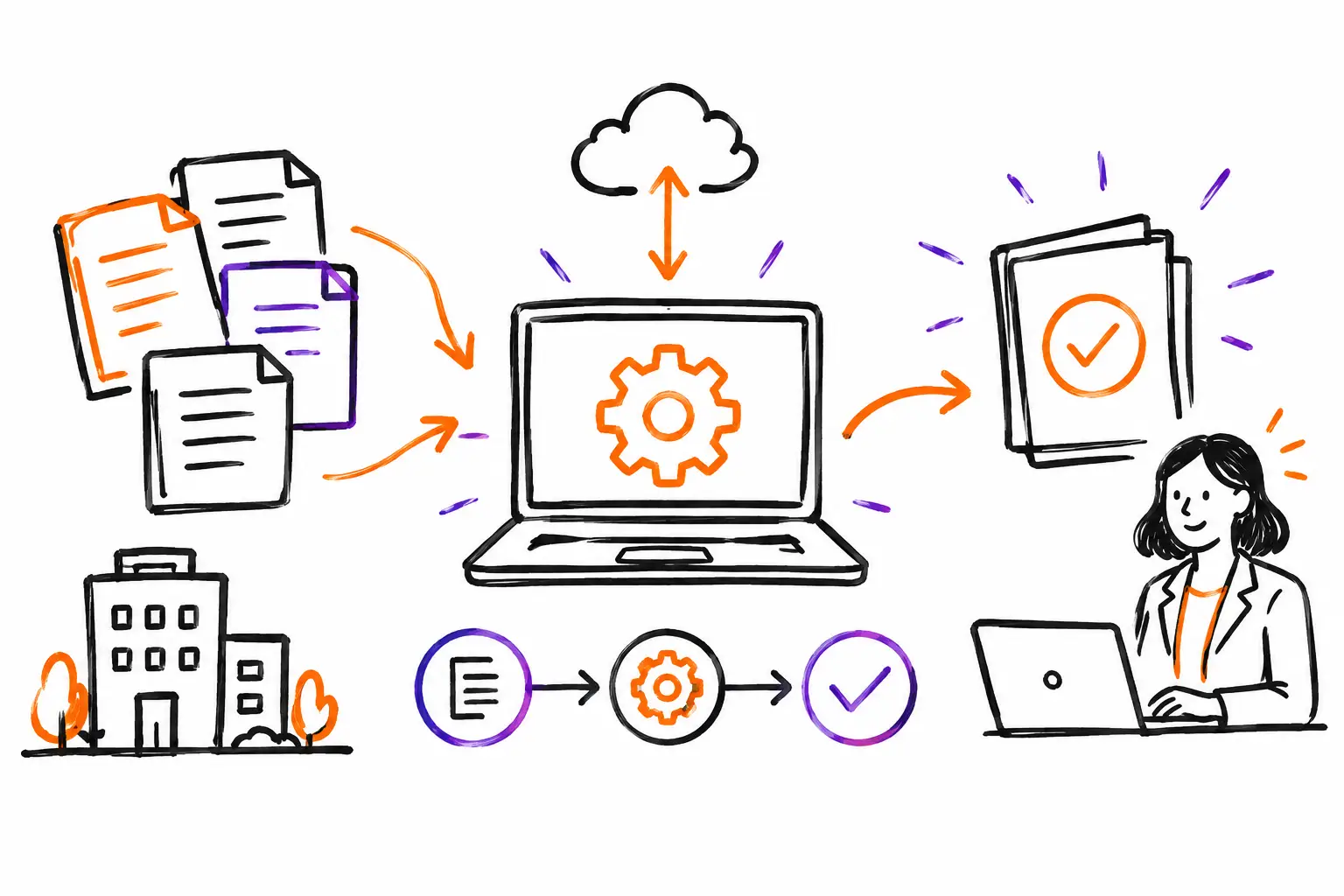
A useful workflow connects the steps. An accepted quote can create a work document. The document gives the team the tasks and client information. At the end, the hours, materials, expenses, and validations become available to prepare the invoice. The office verifies exceptions, rather than re-entering every line.
This is the approach Sequentia applies: the work document becomes the central point to which tasks, photos, time, communications, and billing data are attached. For an SME, the result is not abstract. An intervention completed in the morning can be verified and billed the same day, with fewer calls and fewer documents to search for.
How to start without disrupting your operations
The best first form is not necessarily the most used one. Choose the one that creates the most friction or blocks billing. It could be an emergency work order, a project-based timesheet, or an inspection report that requires photos and a signature.
Then, take a few real files and follow their complete journey. Where is the information written? Who consults it? At what point is data re-entered? What questions come up most often at the office? This observation allows you to keep the useful fields and eliminate those that exist only because they were already printed on an old sheet.
Do a trial with a small team for a few weeks. Ask the field staff what is too long, what is missing, and what actually avoids a follow-up call. Also, measure the delay between the end of the work and the sending of the invoice. A tool adopted in the field is worth more than a perfect form that no one fills out correctly.
The real target isn't to make all paper disappear by tomorrow. It’s to circulate complete information at the moment it still has value. Start with a document that wastes your team's time. When the field, the office, and the billing department are finally working from the same file, paper will quickly stop seeming practical to you.