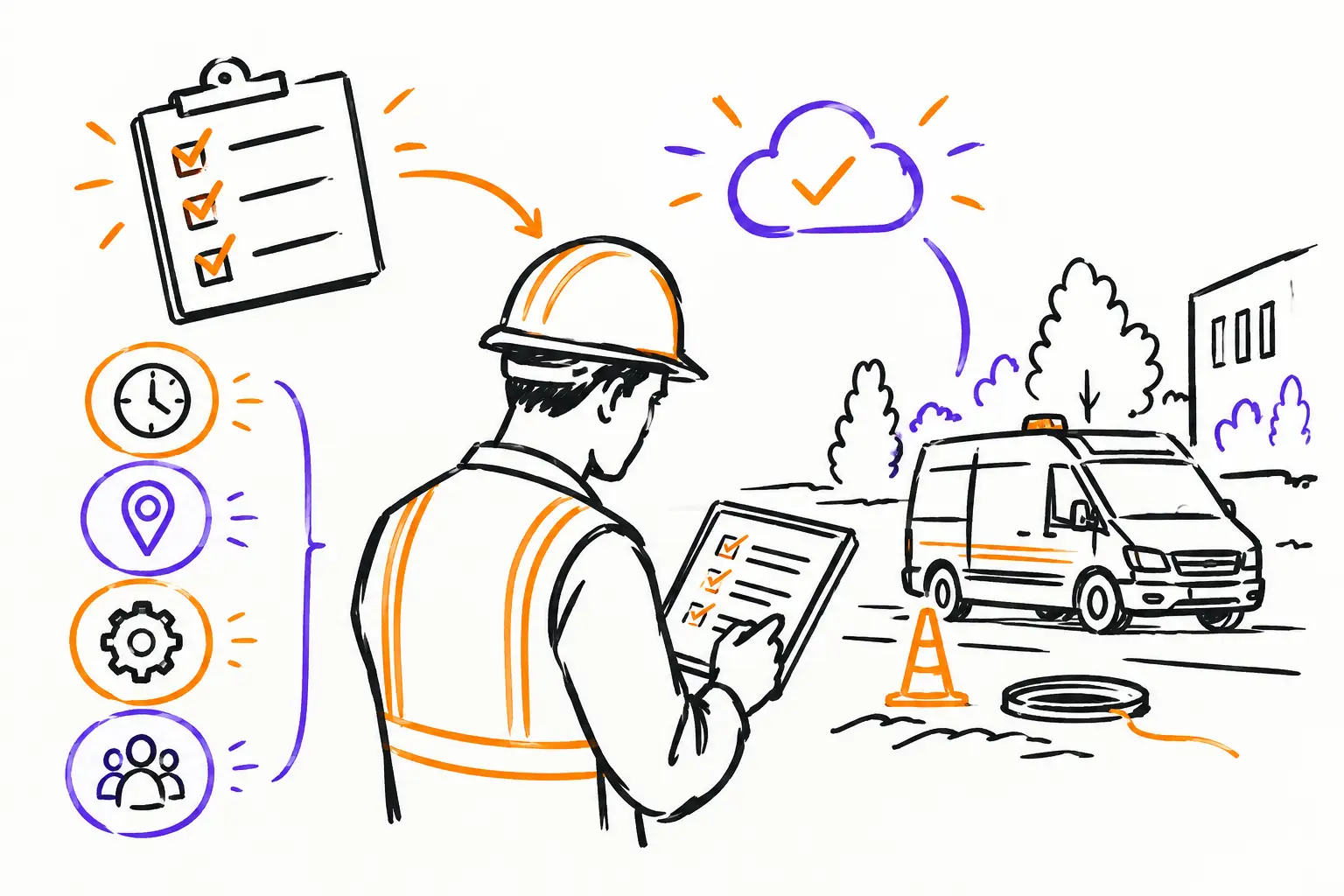
A technician finishes a job, takes three photos, adds a used part, and heads to the next client. Back at the office, the coordinator is still searching for information in text messages, emails, and a timesheet received two days later. This is precisely where SME automation creates value: it keeps real work moving, at the right time, without asking the team to explain it a second time.
For an SME in services, construction, maintenance, or project management, automating does not mean replacing people with robots. It means removing unnecessary relays, predictable oversights, and the data re-entry that slows down operations. The right goal is not to automate every action. It is to ensure that a work order, mandate, ticket, or project becomes a reliable source of information from start to invoice.
SME automation starts with the work document
Many companies start by looking for a billing tool, a timesheet tool, or a communication app. The problem is rarely the lack of a tool. It is rather the absence of a common file that connects the steps.
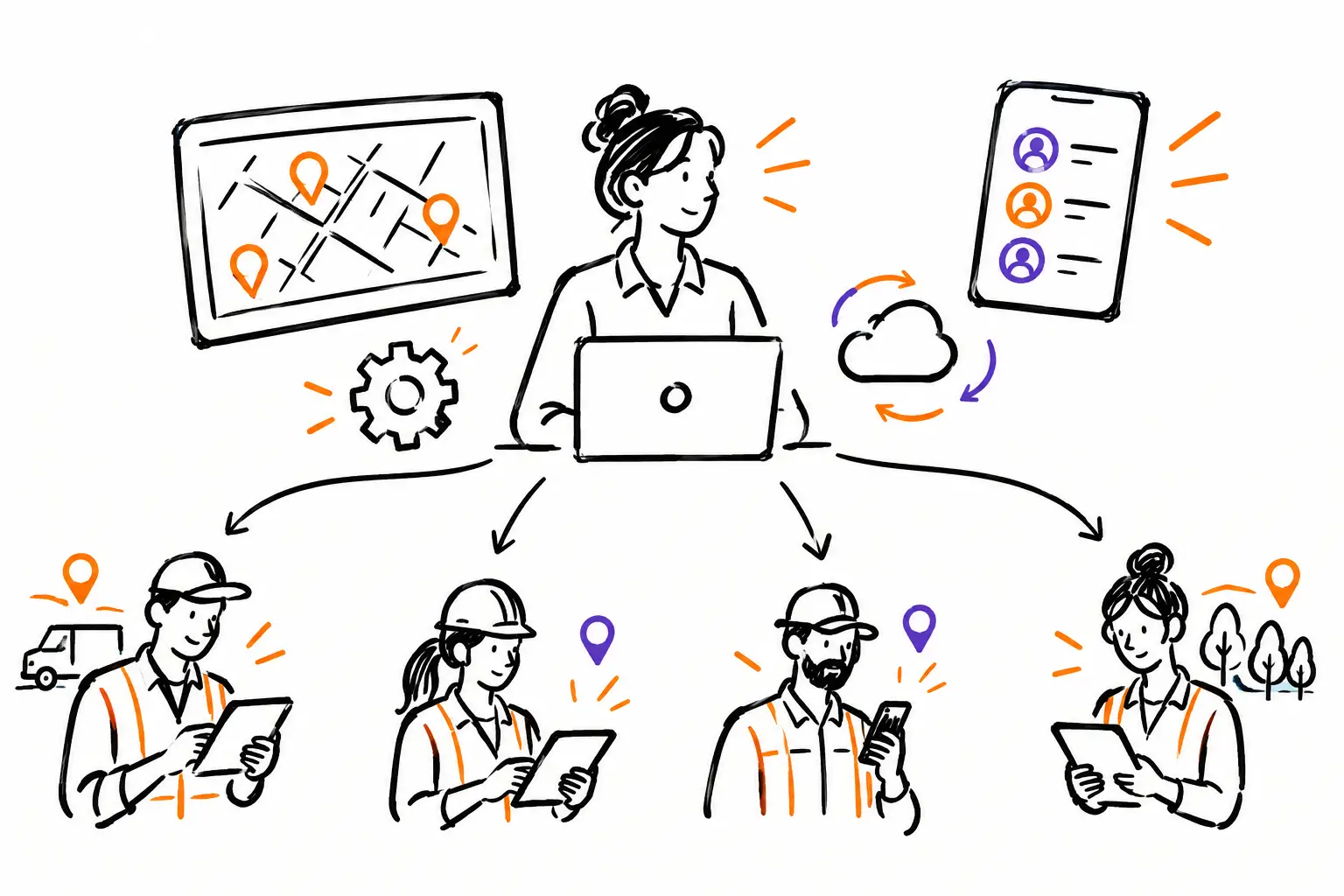
Take a technical maintenance company. A client request arrives, the office prepares a quote, plans a visit, and assigns an employee. On-site, the employee needs to know what to do, follow procedures, log hours, attach photos, and have the client sign if necessary. Then, the office must verify the work, bill for hours and parts, and respond to the client with a clear history.
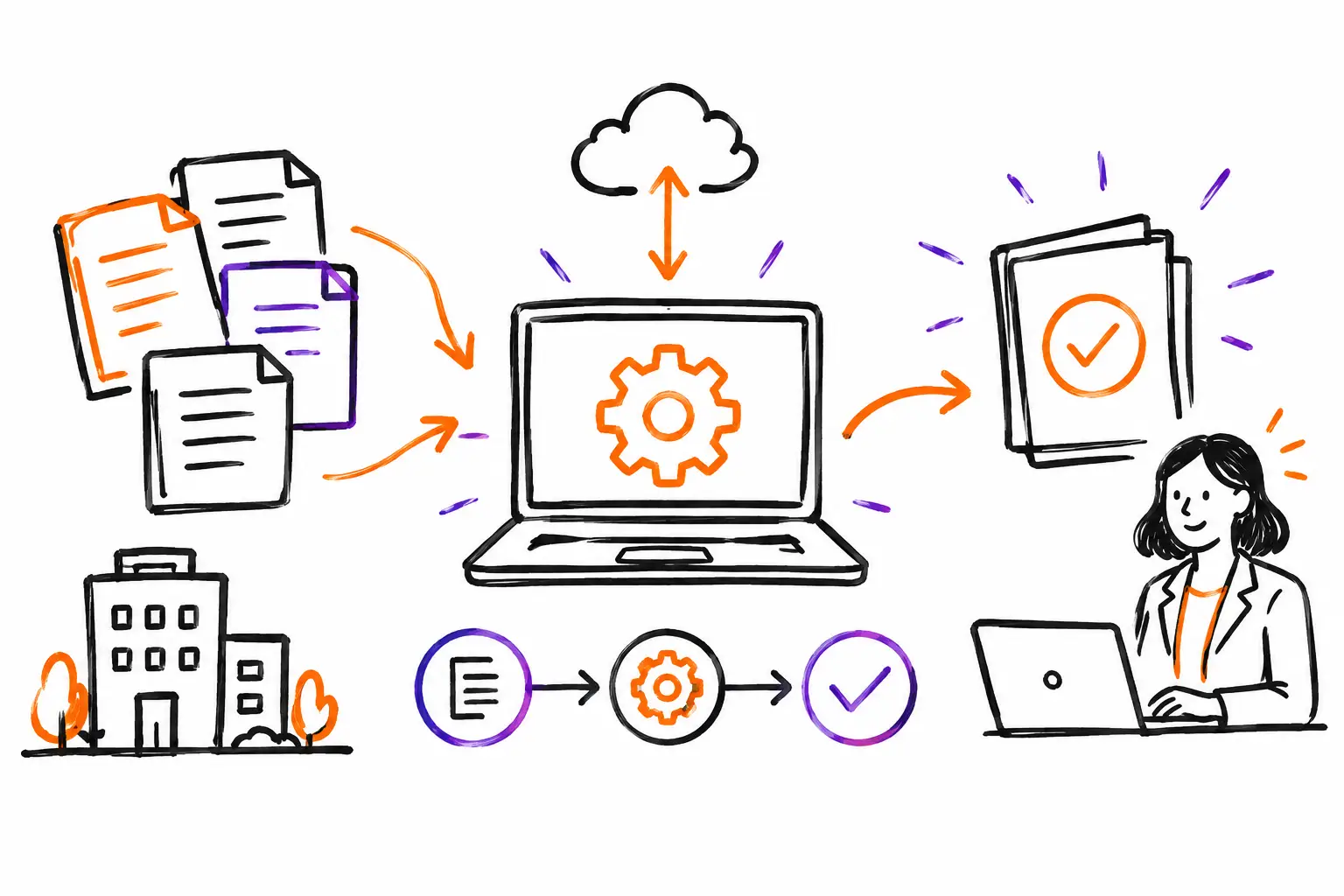
If every step lives in a different system, the team spends their time transferring information. If the work document centralizes everything, each action can trigger the next. An accepted quote can create a work order. A "ready to schedule" status can notify the dispatcher. Approved hours and validated expenses can feed the invoice. It is not spectacular, but that is where costly delays disappear.
However, the document must resemble the company's trade. An excavation work order does not have the same fields, validations, or attachments as a production agency mandate. Useful automation respects this difference instead of forcing everyone into a generic flow.
Time-wasters that are truly suited for automation
Automation yields the best results when it targets stable and frequent repetition. A complex exception or a delicate client decision still deserves human judgment. Conversely, the following tasks are often good candidates because they recur in almost every file:
- creating a file from an accepted quote;
- assigning a task based on the type of work, area, or availability;
- sending a reminder when a document remains incomplete;
- requesting approval before moving to the next step;
- preparing an invoice from entered hours, parts, and expenses.
The difference is important. An automatic reminder for a missing timesheet does not replace a manager. It saves them from chasing the same information every Friday. A rule that requires a photo before closing a job does not replace field expertise. It protects the proof of work and limits disputes with the client.
The right status at the right time
Statuses are among the simplest and most effective tools. "To be estimated," "scheduled," "in progress," "waiting for parts," "to be validated," and "ready to invoice" may seem mundane. Yet, when they trigger notifications, responsibilities, and follow-up lists, they provide an immediate reading of activity.
A manager no longer needs to ask everyone where their file stands. They see blocked work, completed jobs waiting for approval, and amounts that can be billed. The field team, for its part, sees what they need to do now rather than a long chain of contradictory messages.
Moving information from the field to the invoice
Late billing is rarely an accounting problem. It often starts in the field: an unrecorded hour, a forgotten part, a missing photo, or a work order closed without a signature. For every piece of missing information, the office must investigate. The invoice goes out later, and the company ends up financing the delay itself.
A well-designed flow transforms data entered during execution into billable information. The employee enters their time in the correct file, chooses the parts used, and adds a useful note. If the type of intervention requires it, the client signs on mobile. The manager then validates the document. Approved items become available for billing, without needing to be recopied into another spreadsheet.
This does not mean that every invoice must go out automatically. Some companies want to verify rates, group several interventions, or apply conditions specific to a contract. Automation can prepare the invoice and leave the final decision to the administration. This is often the best balance between speed and control.
At Sequentia, this logic is based on the company's business document. The same file can contain the tasks, procedures, photos, hours, communications, expenses, and documents needed to track work until its monetization. The goal remains concrete: invoice in one click based on what was actually executed, without double entry.
Do not automate a process that is already confused
Automating a bad process mostly accelerates confusion. Before creating rules, you must look at the real path of a file. Not the ideal path displayed in a manual, but the one teams follow on a busy Tuesday.
Ask direct questions. Who opens the file? What needs to be known before assignment? What element proves the work is finished? Who can modify hours? At what point should the client be notified? What prevents the invoice from going out?
This discussion often reveals implicit rules. For example, a coordinator knows that an urgent intervention must be validated by phone, even if the system indicates "finished." Or, a rental expense must be approved before being rebilled. These exceptions are not flaws. They simply need to be integrated into the flow rather than left in one person's head.
Start with a single profitable path
It is not necessary to transform the entire company in one month. Start with a path that is frequent, time-consuming, and relatively predictable. For many SMEs, the best candidate is the "accepted quote → work order → hours and parts → validation → invoice" path.
Then, measure what changes. How many days pass between the end of the work and the sending of the invoice? How many files return to the field because information is missing? How many administrative hours are spent searching for details? These measures avoid confusing automation with simple digitization.
Once the first path is stable, expand. You can automate recurring maintenance, renewal reminders, inspections, client follow-ups, or the replenishment of certain parts. Each addition must answer a simple question: what concrete friction does it remove for the team or the client?
Keep humans responsible
Automation is useful when it makes responsibilities visible. It becomes dangerous when it masks an error or sends an inappropriate communication without control. A delay notification can be automatic. A delicate message to an unhappy client should generally be reviewed by a person.
You must also plan who maintains the rules. Methods change: new services, new rates, new teams, requirements of important clients. A configurable flow must be able to evolve without starting from scratch. This is particularly true for Quebec SMEs that have developed their own way of delivering service and do not want to sacrifice it to fit into a software box.
Good automation leaves more time for the field to do the work, more visibility for the office to coordinate, and more confidence for the leader to decide. Start with the next file that risks getting lost between two people: if it can follow a clear path to the invoice, you already have an improvement that counts.