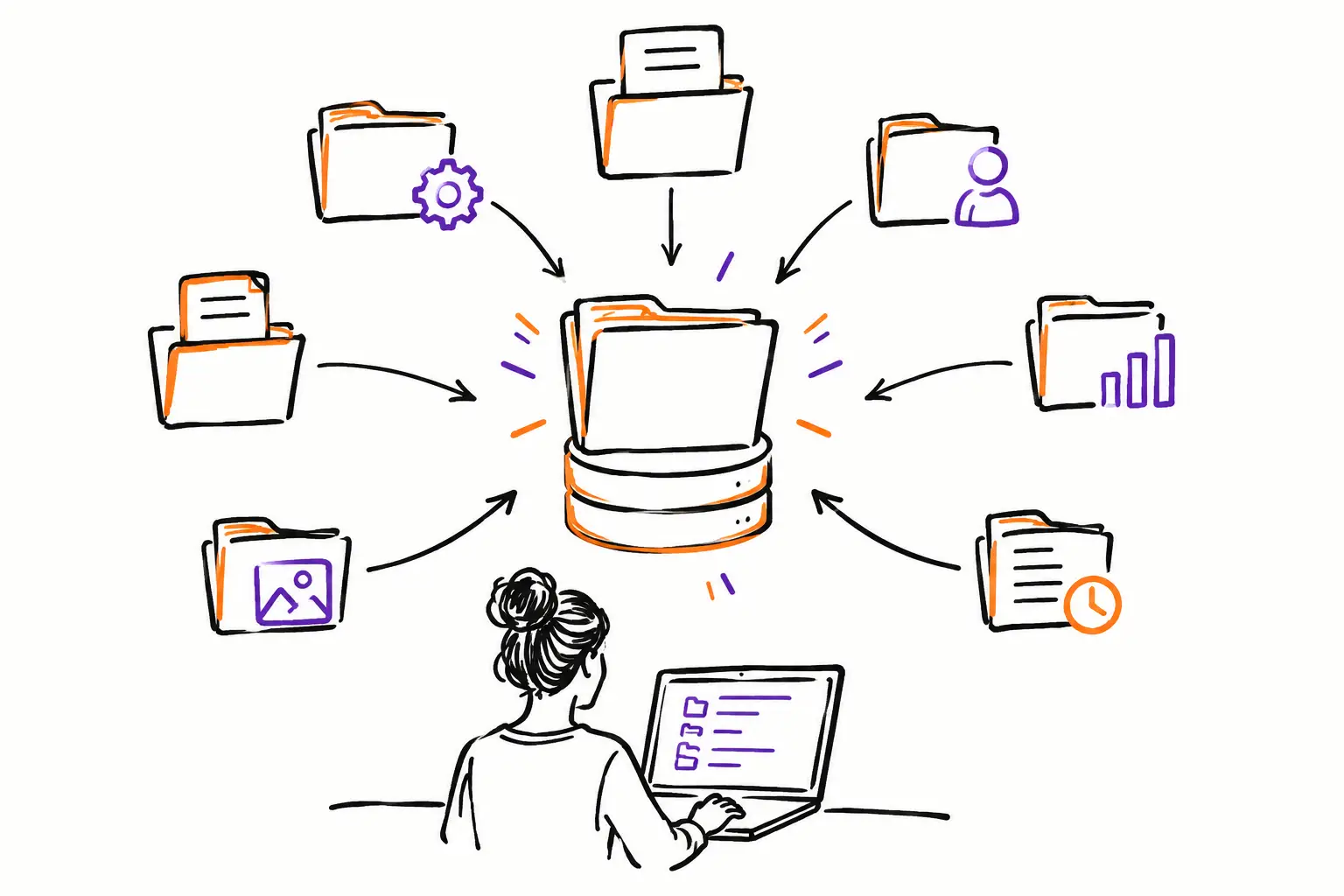
A technician arrives at a client site without the required part. A team is waiting because the equipment is already on another job site. The office finds out at 4:00 PM that an urgent request was never assigned. These aren't just scheduling issues; they are losses in time, margins, and trust. Resource planning is precisely about matching the work to be done with the right people, the right equipment, and the right information.
For an SME working in the field, planning isn't just about filling a calendar with colors. You need to know what is actually available, what is already committed, which skills are required, and what has changed since yesterday. When these answers live in text messages, Excel sheets, and the dispatcher's head, the schedule may look full, but the operation remains fragile.
Resource planning starts with the actual work
A reliable schedule starts with the document that drives the work: a work order, a mandate, a service ticket, or a project. This is where you find the client, address, tasks, deadlines, photos, procedures, and required parts. If planning is separated from this document, the team must ask for clarification, search for an attachment, or guess the actual priority.
Take a technical maintenance company. The coordinator receives a request for an urgent repair in a building. They must be able to see the type of intervention, estimated duration, urgency level, and client history before assigning a technician. The technician, in turn, must receive the same file on their mobile device, with instructions and useful documents. In the end, their hours, photos, and validation must return to the office without re-entry.
It is this continuity that transforms an assignment into delivered work. An isolated calendar only says that a person is busy. A well-structured work document explains what they must do, for whom, and with what constraints.
See real capacity, not just empty slots
An empty time slot does not mean a resource is available. An employee might be traveling, in training, on vacation, or already tied up with an urgent task that is running over. A truck might be free on paper but missing an inspection or the specialized tool required. Real capacity takes context into account.
To plan with precision, you must at least track availability, skills, planned load, and field constraints. In some companies, geographic proximity counts as much as skill. Sending a qualified employee to the other side of the region might save an urgent intervention, but it is costly if another competent team is already in the area.
Estimated duration also deserves to be treated honestly. If every work order is arbitrarily given one hour, the schedule will provide a false impression of control. Instead, compare estimates to the time actually logged after execution. You will see which types of interventions regularly run over, which clients require more follow-up, and which tasks are undervalued.
This data isn't for monitoring teams on principle. It allows you to promise realistic deadlines, protect margins, and prevent the last appointment of the day from automatically becoming a delay.
Skills must be planned, not assumed
Two available people are not always interchangeable. An electrical intervention, a regulatory inspection, or an adjustment on specific equipment may require a certification, experience, or a specific authorization. By planning based on known skills, the dispatcher avoids sending a team only to discover on-site that they cannot complete the mandate.
The same principle applies to mixed teams. Some jobs require two people, a supervisor, or an external resource. The assignment must keep these dependencies visible. Otherwise, the calendar confirms a visit, but the site lacks a key participant when it is time to start.
Making the schedule a decision-making tool
A good planning board shouldn't require a meeting to answer simple questions. Who is assigned today? Which jobs are at risk of running over? What vehicle is required? Which urgent interventions don't have an owner yet? Which work orders are waiting for a part or approval?
Statuses play a concrete role here. To be planned, assigned, en route, on-site, on hold, completed, and ready to bill are not just labels. They indicate the real state of the operation. When the field team updates their status from their mobile, the office can react before a problem becomes invisible for two days.
However, you must avoid creating too many steps. An SME doesn't need a heavy process to plan well. It needs a few statuses that match its way of working and that teams will actually use. Your methods are unique; your software should be too.
Anticipate the unexpected without emptying the schedule
A schedule filled to 100% looks efficient until the first emergency. In field services, the unexpected is part of the job: client breakdown, weather, access delays, missing parts, or an intervention that takes longer than expected. The question isn't how to eliminate them, but how to absorb them.
Some teams reserve daily capacity for emergencies. Others identify a flying team or group visits by zone to reduce travel. There is no single right method. An excavation company, a specialized workshop, and a property manager do not have the same constraints. The key is to make the trade-off visible: accepting an emergency might mean moving a lower-priority job, adding hours, or assigning a more expensive resource.
When this decision is made in the system, with the reason and the new appointment, the client receives a clear answer and the team avoids incomplete handoffs.
Connecting resources, inventory, and billing
Planning becomes much more useful when it doesn't stop at the assignment. A work order can indicate planned labor, necessary equipment, consumed parts, and expenses to authorize. The team doesn't have to rebuild their report at the end of the day: they complete the same file during execution.
Imagine the following path: an accepted quote creates a work document; the coordinator plans the team and equipment; the participants log their hours and parts used; the client signs; the office reviews exceptions and then invoices based on the work actually performed. Each step feeds the next.
This is where double entry disappears. Hours don't have to be copied from a timesheet into billing software. Photos don't stay on an employee's phone. Expenses aren't discovered after the invoice is sent. A platform like Sequentia allows you to keep these elements in the business document your company already uses, rather than forcing your operations into a generic model.
You must also choose the right level of control. For small recurring jobs, a quick validation might suffice before billing. For a tight-margin project, the manager will want to compare actual hours and costs to the budget before billing. Planning must support both realities without slowing down every intervention.
Installing a method that teams will adopt
The best tool won't fix missing information or non-existent team discipline. Start by defining the data that must be known before an assignment: client, location, nature of the work, approximate duration, required skill, priority, and critical equipment. If this information isn't available, the file should remain in preparation rather than being placed in the schedule by default.
Next, give field teams a simple way to confirm their progress. A few well-chosen actions are better than a complex report filled out on Friday. For example, confirm departure, log time, add a photo if necessary, report a blockage, and have the client sign when the work is finished. The office recovers actionable information while the context is still fresh.
Finally, look every week at the gaps between what was planned and what was delivered. Do delays come from travel, estimates, missing parts, client changes, or a rare skill? This discussion must lead to a specific action: adjusting standard duration, reviewing service zones, maintaining minimum inventory, or training a second person.
Your goal is not to build a perfect schedule. It is to give your teams the means to make good decisions when the day doesn't go as planned. When every work order connects resources, execution, and the invoice, you keep control without adding paperwork to those doing the work.