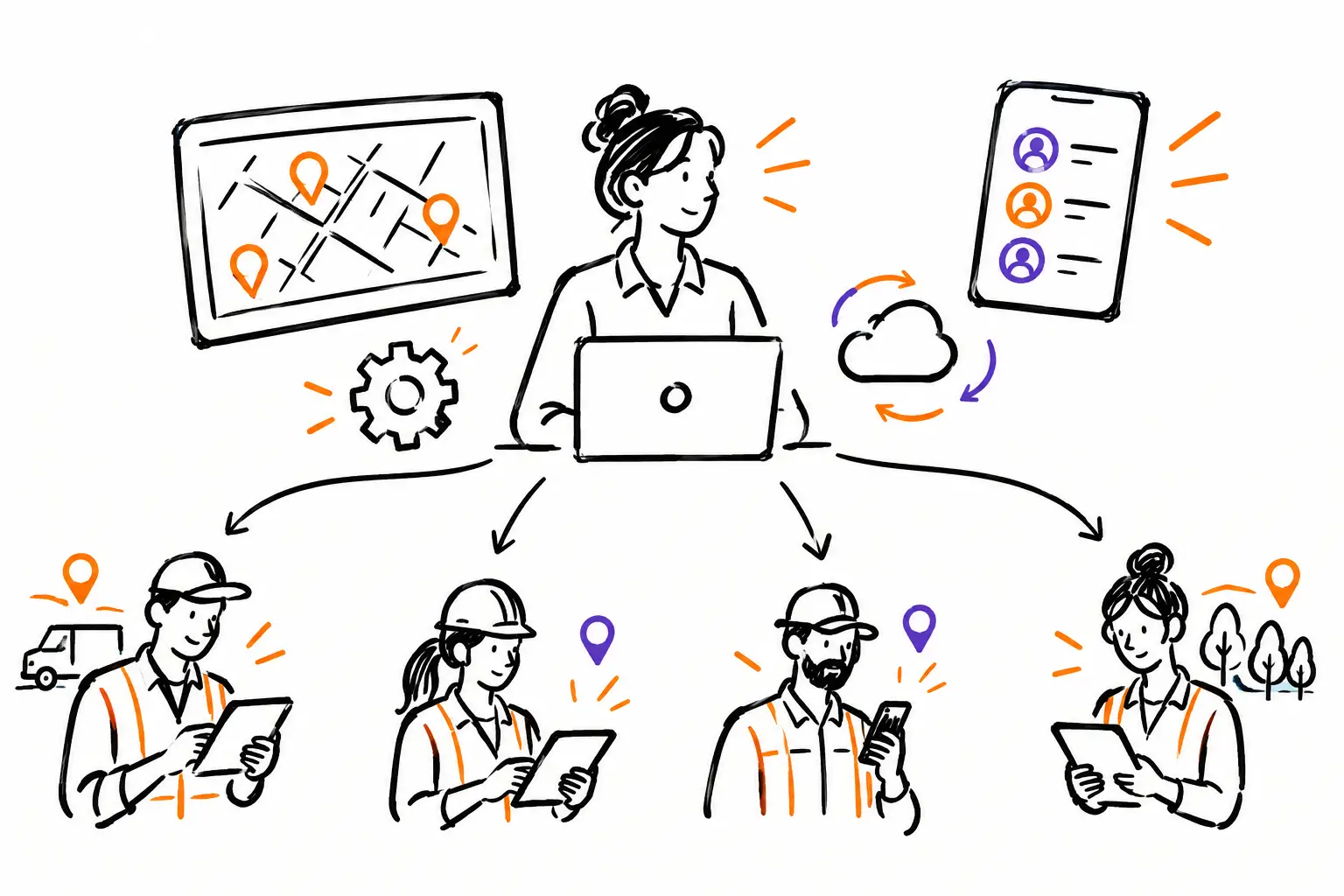
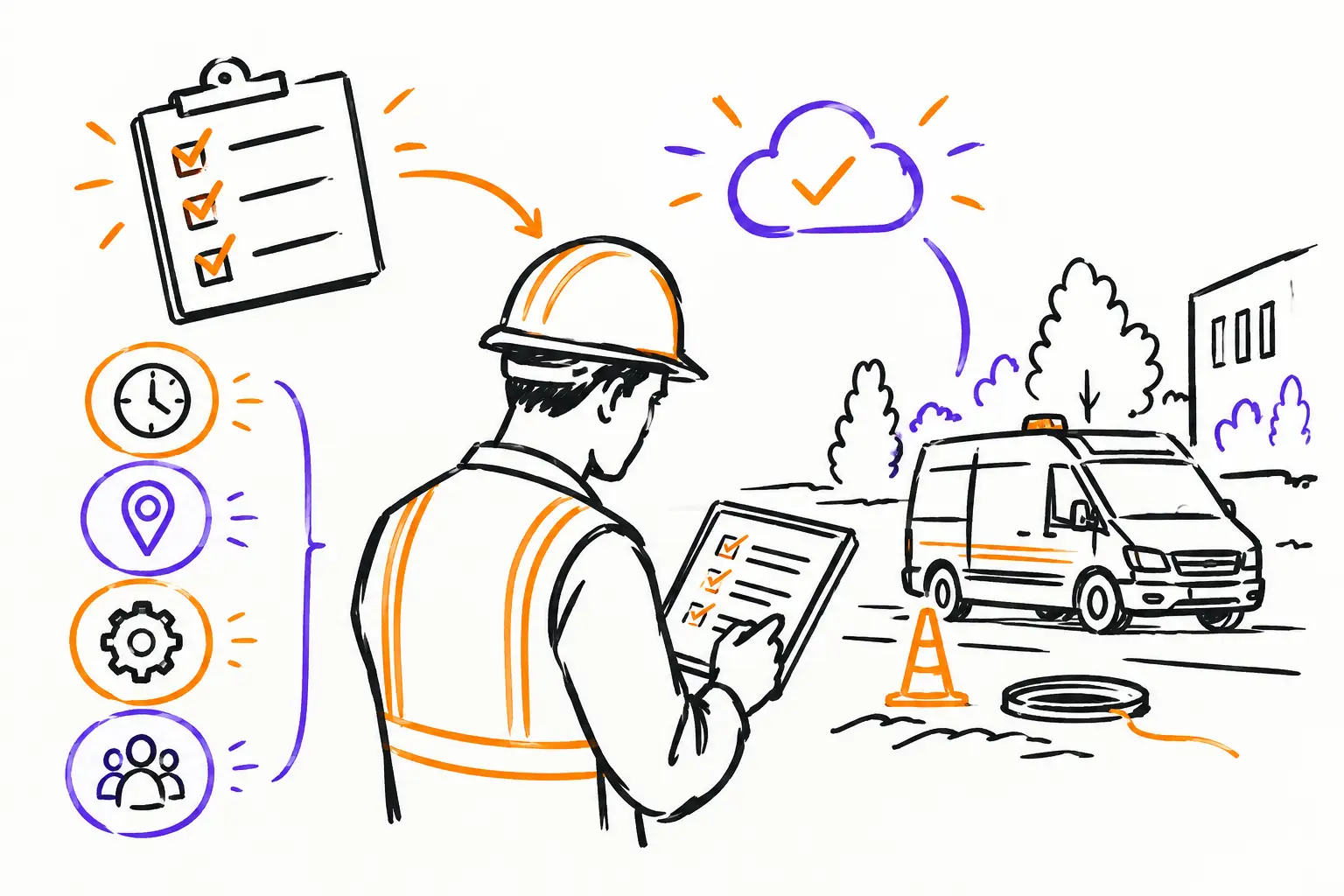
A technician finishes a job, takes three photos, adds two hours of labor, and gets the client's signature. Yet, back at the office, the information remains stuck on their phone, on a piece of paper, or in a text message. Someone has to call back, interpret, re-enter the data, and then try to bill the client without forgetting the parts used. A mobile work order software is primarily designed to avoid this costly and all-too-common scenario.
For an SME managing field teams, a work order is not just a form to fill out. It is the file that tells the story of what needed to be done, what was actually executed, what was approved, and what needs to be billed. When it follows teams on mobile and stays connected to the office, it becomes a tool for coordination, control, and revenue.
Mobile work orders must follow your actual operations
A generic work order rarely fits for long. An excavation company does not document a job the same way a property manager does. A specialized workshop sometimes needs to track serial numbers and parts. A technical services company may need to attach a safety procedure, before-and-after photos, and then a client signature.
The right software does not force all these realities into the same boxes. It allows you to build a work document that respects your method: mandate, service ticket, intervention report, project, or maintenance order. The fields, statuses, checklists, and approvals must reflect what your teams are already doing in the field.
This customization does not mean creating a complex, bloated system. It consists of asking the right questions at the right time. When a service call opens, the team sees the address, contact, relevant equipment, and instructions. During the intervention, they add the tasks performed, hours, expenses, and parts. Upon closing, the file is complete and ready for the next step.
What mobile work order software must centralize
Mobile is useful when it avoids incomplete handoffs. A technician should not have to search for mandate details in their emails, send photos in a separate conversation, and fill out their hours in another application on Friday afternoon. Everything used to execute the work should be attached to the same file.
An effective mobile work order centralizes customer information, location, tasks to be done, procedures, attached documents, photos, comments, time, expenses, and validations. Every addition must remain dated and associated with the person who made it. This traceability protects both the team and the company when a client asks what was done or disputes an invoice.
The document status also plays a concrete role. "To be scheduled," "assigned," "in progress," "waiting for parts," "to be validated," and "completed" give the office a real-time view of activity. These are not decorative labels: they allow you to know which interventions require follow-up, which jobs are awaiting approval, and which files can be billed.
Information must be useful to both the field and the office
The field needs to move fast. On a phone, the interface must present the essentials without requiring an endless report. Clear task lists, predefined choices, photo uploads, and direct signatures reduce oversights without slowing down the intervention.
The office, for its part, needs an actionable file. If hours are entered against the work order, they don't need to be searched for in a timesheet. If parts are added during execution, they can be verified before the invoice is sent. If the client signs on-site, the administrator doesn't have to chase down a confirmation email.
The goal is not to monitor every move. It is to circulate reliable information at the moment it has value.
From mandate to invoice, without double entry
The most visible gain from mobile software often comes at the billing stage. In many SMEs, the work is finished in the field, but the invoice is delayed because the data is scattered. Hours arrive late, materials are noted on a sheet, photos are lost, and no one knows if the client accepted the extra work.
With a central file, the process becomes simpler: a quote can become a work document, the document is completed throughout the intervention, and then the billable items are pulled into the invoice. Data is not copied; it is validated.
This nuance matters. Automating an invoice from incomplete data creates errors faster. The right process includes a verification step, especially for variable-rate work, subcontracting costs, or out-of-contract interventions. The manager can confirm hours, quantities, and extras before billing with one click.
For recurring contracts, the same principle helps protect margins. Each visit keeps its history, planned tasks are visible, and discrepancies are documented. If an intervention falls outside the planned scope, the team can flag it before the extra time disappears into overhead costs.
Mobility does not fix a vague process
Buying an application alone will not correct poorly defined responsibilities. Before choosing a tool, you must decide who creates the work order, who assigns it, what information is mandatory, who validates the completed work, and when billing can begin.
Start with a common scenario, not all your exceptions. Take a service call: the coordinator receives the request, creates the work order, and adds the client information. The technician receives their mandate on mobile, documents their intervention, and obtains the signature. The manager verifies the billable items. The administration transforms the executed work into an invoice.
If this flow works for 80% of your interventions, you have a solid foundation. Exceptions can then be configured according to your trade: manager approval, mandatory purchase order, compliance photos, reserved inventory, or detailed reports provided to the client.
Errors to avoid during deployment
The first error is reproducing every old paper form exactly as it is. Some information might still be useful, but other parts are never read or used. Keep what helps you do, decide, prove, or bill the work.
The second error is launching the tool without simple rules. A "completed" status must mean the same thing to everyone. For example, the file could require hours, checked tasks, and a signature before moving to this status. Without this discipline, a dashboard only shows a more modern version of existing disorder.
The third error is choosing a closed system that does not connect with your other tools. Depending on your context, the software will need to exchange data with your accounting, calendar, customer contacts, or inventory systems. You shouldn't integrate just for the sake of it, but to eliminate re-entry that wastes time and creates discrepancies.
Measuring what actually changes
Success is not measured by the number of work orders created. It is seen in simple indicators: the delay between the end of work and sending the invoice, the percentage of complete files, unbilled hours, pending interventions, and time spent correcting information.
A company can also compare the projected margin to the actual margin by type of mandate, client, or team. This data only becomes reliable if it is entered during the work, not reconstructed several weeks later. That is where mobile makes all the difference.
Sequentia adopts this logic around the work document itself. The work order becomes the central point where teams execute, communicate, validate, and prepare billing, according to their own methods rather than an imposed workflow.
The best software doesn't make your field expertise disappear. It makes it visible, traceable, and usable by the entire company. When a file moves from mandate to intervention to invoice without needing to be rebuilt, your teams spend less time explaining what they did and more time delivering better service.