A technician finishes a job, notes their hours on a sheet, takes a few photos, and notifies the office by text. Two days later, the assistant gathers the information to prepare the invoice. In between, an hour is missing, a part wasn't recorded, and the photo proving the work done is still on a phone. This is the concrete problem behind the question: how can you reduce administrative double entry without increasing the workload for your teams?
For an SME in services, construction, or field operations management, re-entering data doesn't just cost time. It slows down billing, creates discrepancies in client files, and forces managers to verify what should have been reliable from the start. The right approach isn't to ask teams to be more vigilant. It is to have the same information flow through a single workflow.
Where administrative double entry takes root
Double entry appears when the same operational fact must be copied into multiple tools. An hour worked is entered into a timesheet, then into an Excel file, then into the accounting software. An expense is photographed in the field, transcribed into an email, and re-entered for billing. A paper work order is filled out at the client's site, then an office member tries to decipher it to close the file.
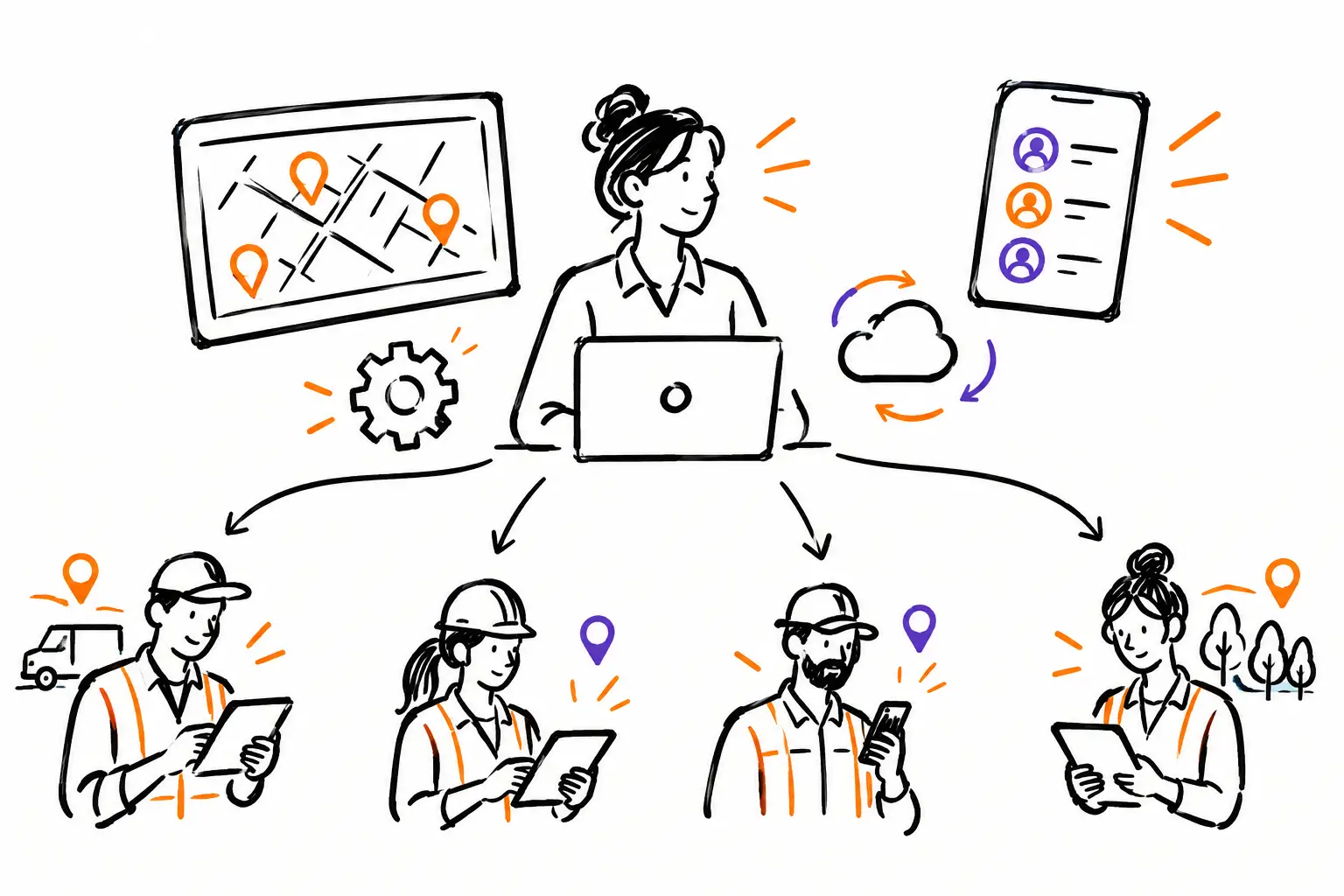
The problem doesn't always come from bad software. It often comes from a chain of tools that do not share the same work file. Each team does its part with the available means: the field uses its phone, the office its email, management its spreadsheets, and accounting its system. But no one is actually working from the same source.
This fragmentation also creates incomplete handoffs. The technician knows they added a filter. The coordinator knows client authorization was obtained. The person billing sees neither. They must then call, follow up, or guess. Re-entry becomes a default validation method, with all the delays that entails.
How to reduce administrative double entry at the source
The most sustainable solution is to make the work document the starting point of the process. Depending on your trade, this document can be a work order, a mandate, a service ticket, a project, or a service file. The essential thing is that it accompanies the work from start to finish.
An accepted quote can become a work document. The team sees the tasks to be done, instructions, address, required equipment, and client information. In the field, they add hours, materials used, photos, comments, and validations. At the office, this data is used directly to track progress, prepare the invoice, and respond to the client.
The principle is simple: information is entered once, at the moment it is known, by the person who knows it. It should not be copied to become useful for the next step.
This does not mean that everything must be identical for every company. An excavation contractor may need to document equipment, quantities, and site contingencies. A maintenance company might instead require a client signature, before-and-after photos, and a checklist. A production agency will track deliverables, approvals, and hours per project. The flow must respect the business document, not impose a generic model on the team.
Have information entered at the right time
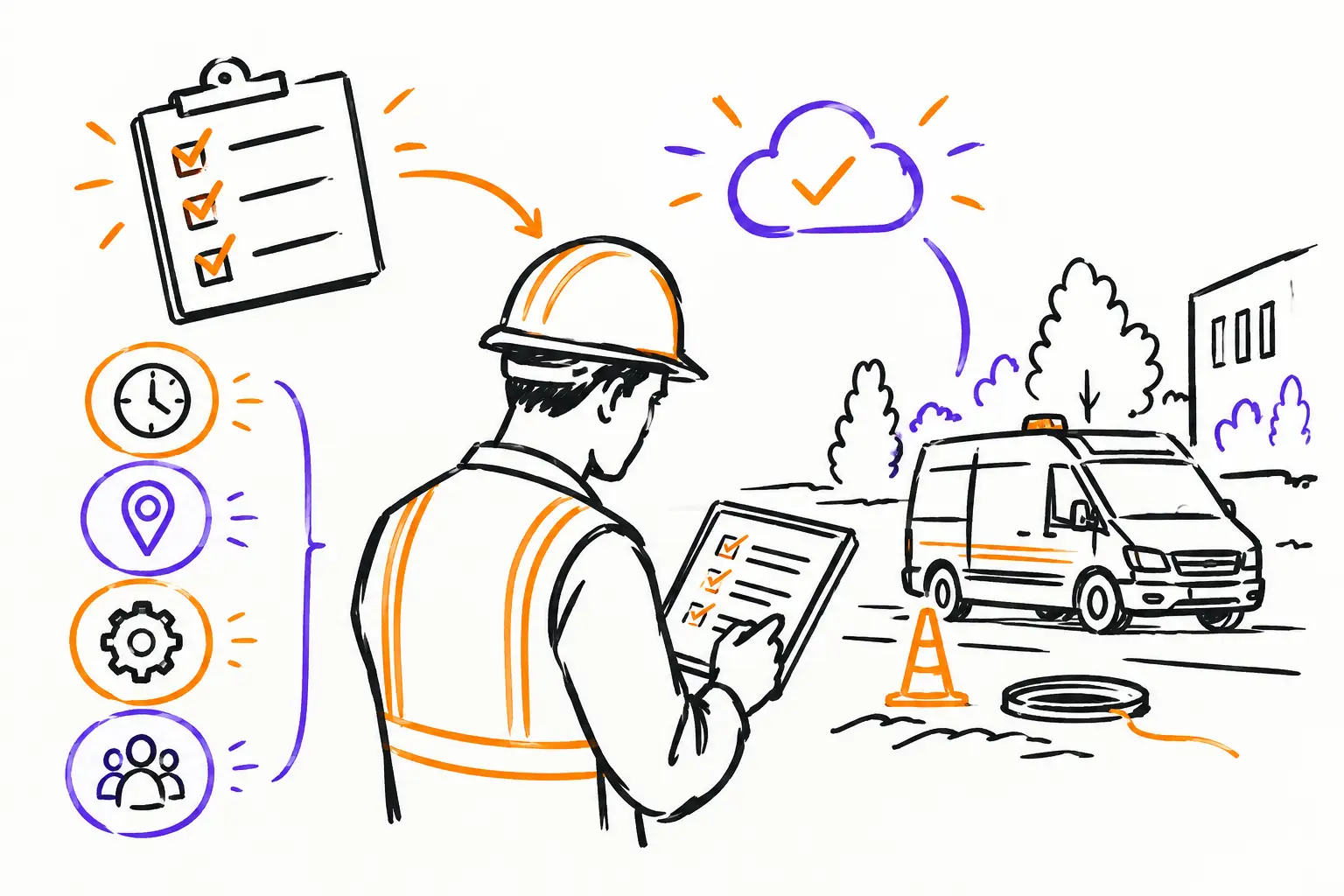
The best data is that which is captured during execution, not that which one tries to reconstruct on Friday afternoon. When hours, parts, and notes are added directly into the mobile work order, the office no longer has to retrieve them by phone or email.
However, one must remain realistic. A field team will not adopt a tool that requires ten screens to enter an hour or attach a photo. Fields must be limited to what is actually used to execute, track, or bill the work. A form that is too detailed shifts the problem: you replace double entry with overly burdensome entry.
Start with the information that causes the most delays: time, materials, job status, client approval, and attachments. Then add the fields necessary for your quality control or reports. This progression helps teams see a concrete benefit within the first few weeks.
Transform statuses into clear handoffs
Statuses are not decorative. Well-configured, they indicate who needs to act and prevent a file from getting lost between the field and the office. For example, a work order can go from planned to in progress, then to ready to verify and ready to bill.
When a job moves to ready to verify, the coordinator knows they must confirm missing information. When it moves to ready to bill, the person responsible can produce the invoice from the hours, expenses, and items already entered. The status replaces part of the follow-up emails and gives everyone a visible responsibility.
Statuses must reflect your true transition points. If your team waits for client approval before ordering a part, add that step. If an invoice cannot go out without a foreman's validation, plan for it. The goal is not to have more statuses, but to make exceptions and responsibilities easy to see.
Connecting field, office, and accounting without replacing everything
Reducing re-entry does not necessarily require replacing all your systems. Many SMEs already have accounting software that meets their financial needs well. The real challenge is to connect work execution to billing and, when relevant, to accounting.
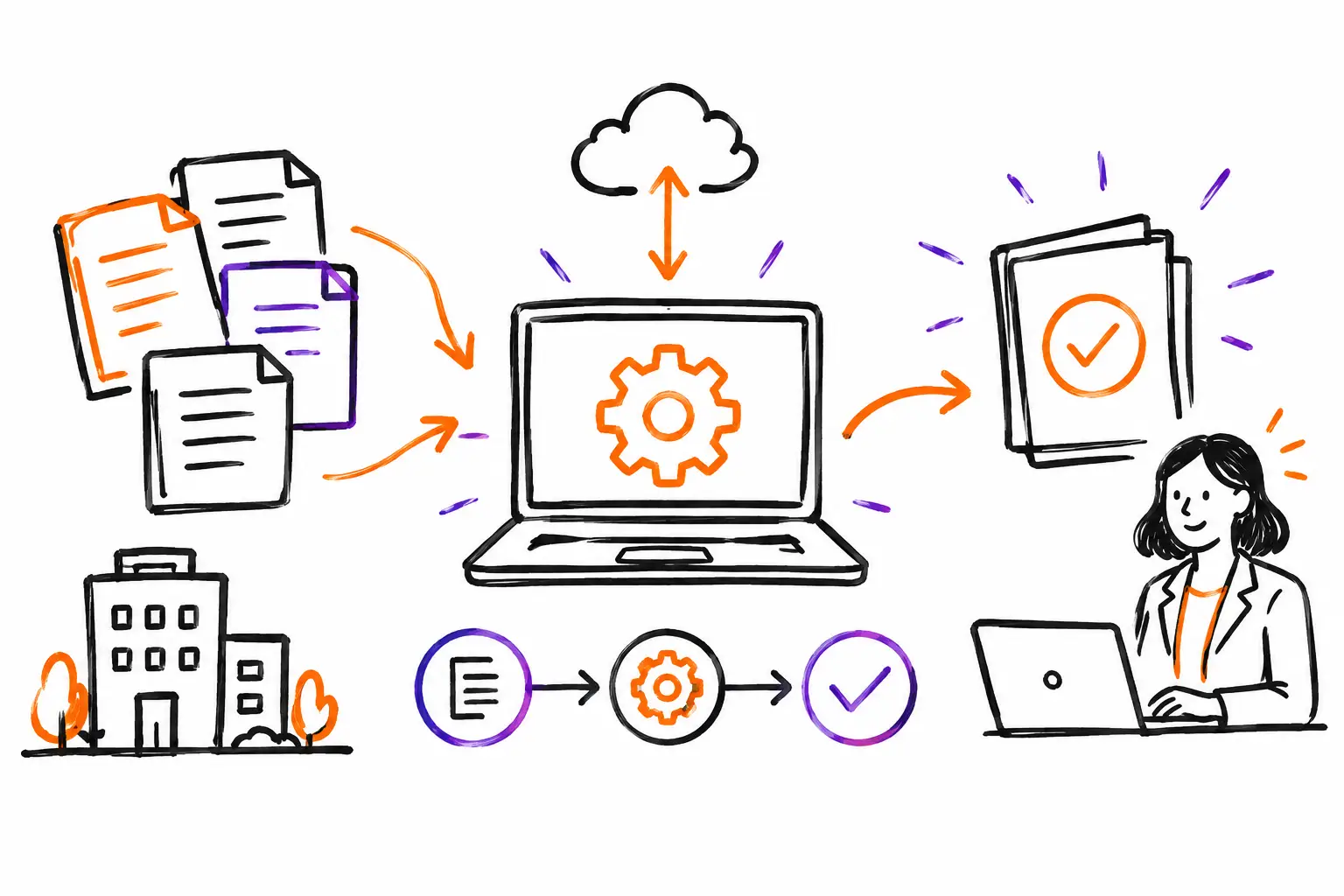
The operational document should be able to feed an invoice with validated data: labor, travel, inventory items, billable expenses, taxes, and relevant notes. The person in the office reviews the invoice, but they do not rebuild it line by line. This nuance is major. Review protects the margin and the client relationship; re-entry consumes time without adding value.
Some data must still be checked before being sent. A part may have been used without being billable. Overtime may require approval. A price agreed upon in a quote may differ from the usual rate. A good system must allow for this verification without forcing you to start from scratch.
Integration with existing tools is also a matter of priorities. For some companies, the first gain will come from work orders and timesheets. For others, it will be the link between expenses, inventory, and invoices. It is better to automate a stable flow than to connect still-unclear processes too quickly.
Standardize what repeats, keep flexibility for the field
Repetitive procedures are the best candidates for standardization. An inspection, a startup, preventive maintenance, or site closure can contain a checklist, mandatory photos, and validation steps. The team saves time because they know what to do, and the office always receives a complete file.
But standardization has its limits. An emergency call, an unforeseen site issue, or a custom mandate requires latitude. Your tool must allow adding a note, a task, or an expense without forcing the team to bypass the process. If people return to text and paper as soon as a case is out of the ordinary, double entry will return.
The right balance consists of framing the elements that must be comparable and billable, while leaving room for exceptions. Document templates, conditional fields, and checklists help achieve this without turning every intervention into an administrative form.
Measure the gains that really count
The number of hours saved is useful, but it is not the only indicator. Observe the delay between the end of a job and the sending of the invoice. Look at the number of files returned to the field for missing information. Track unbilled hours, forgotten expenses, and discrepancies between planned work and actually executed work.
This data quickly shows where the process breaks. If files stay in the ready to verify status for a long time, the problem may lie in approval. If invoices often exclude materials, their entry in the field must be simplified. If teams fill in hours late, the mobile experience may need to be reviewed rather than multiplying reminders.
A platform like Sequentia allows you to centralize this journey around your work document, from quote to invoice, according to your methods rather than an imposed flow.
Start with one flow, not a complete transformation
Choose a frequent and profitable type of work: for example, your service calls, preventive maintenance, or small projects. Map the actual path of the information. Who opens the file? Who adds the hours? When are parts entered? Who validates? Who bills?
Then, remove the re-entries one by one. If data must be entered twice, ask yourself which of the two entries is the official source. Make sure other teams can use it directly. Test the flow with a few users who know the pain points of the field and the office, then adjust the fields, statuses, and notifications.
A simpler administrative process does not start with more control. It starts with a work file clear enough for each person to do their part, once, at the right time. When the field documents the actual work and the office can transform it into tracking and billing, double entry ceases to be a costly habit.