A compressor that can't be found at 7 a.m., a boom lift booked on two job sites at once, and a broken tool that no one reported: these small incidents are costly. Field equipment management isn't just about creating a list of assets. It's about knowing what is available, where the equipment is located, who is using it, and what its usage should generate in revenue.
For an SME, the problem often appears as operations scale up. In the beginning, the owner knows every truck, every machine, and every team member. Then, work orders multiply, teams head in different directions, and information stays trapped in text messages, phone calls, or the memories of a few people. The office searches for answers while the field waits for equipment.
When equipment isn't tracked, the field slows down
Poorly tracked equipment rarely has just one consequence. It triggers a chain of delays: a technician leaves without the right part, another has to take a detour to pick up a tool, a job is postponed, and the invoice is delayed because materials and hours aren't fully accounted for.
The real cost isn't limited to replacing a drill or repairing a vehicle. It includes unproductive hours, emergency rentals, avoidable travel, and missed billing opportunities. In trades where equipment is constantly on the move—construction, maintenance, technical services, excavation, or property management—this loss of visibility quickly becomes a margin problem.
The right question isn't: "Do we have a list of our equipment?" Instead, you should ask: "Can we link every piece of equipment to the work in progress, the person responsible, and its current status?"
Field equipment management: Start with the work order
An effective method begins with the document that already organizes the work. Depending on your business, this could be a work order, a mandate, a service ticket, or a project. This is where the team sees the client, the location, the tasks to be done, instructions, and deadlines. Equipment should follow the same path.
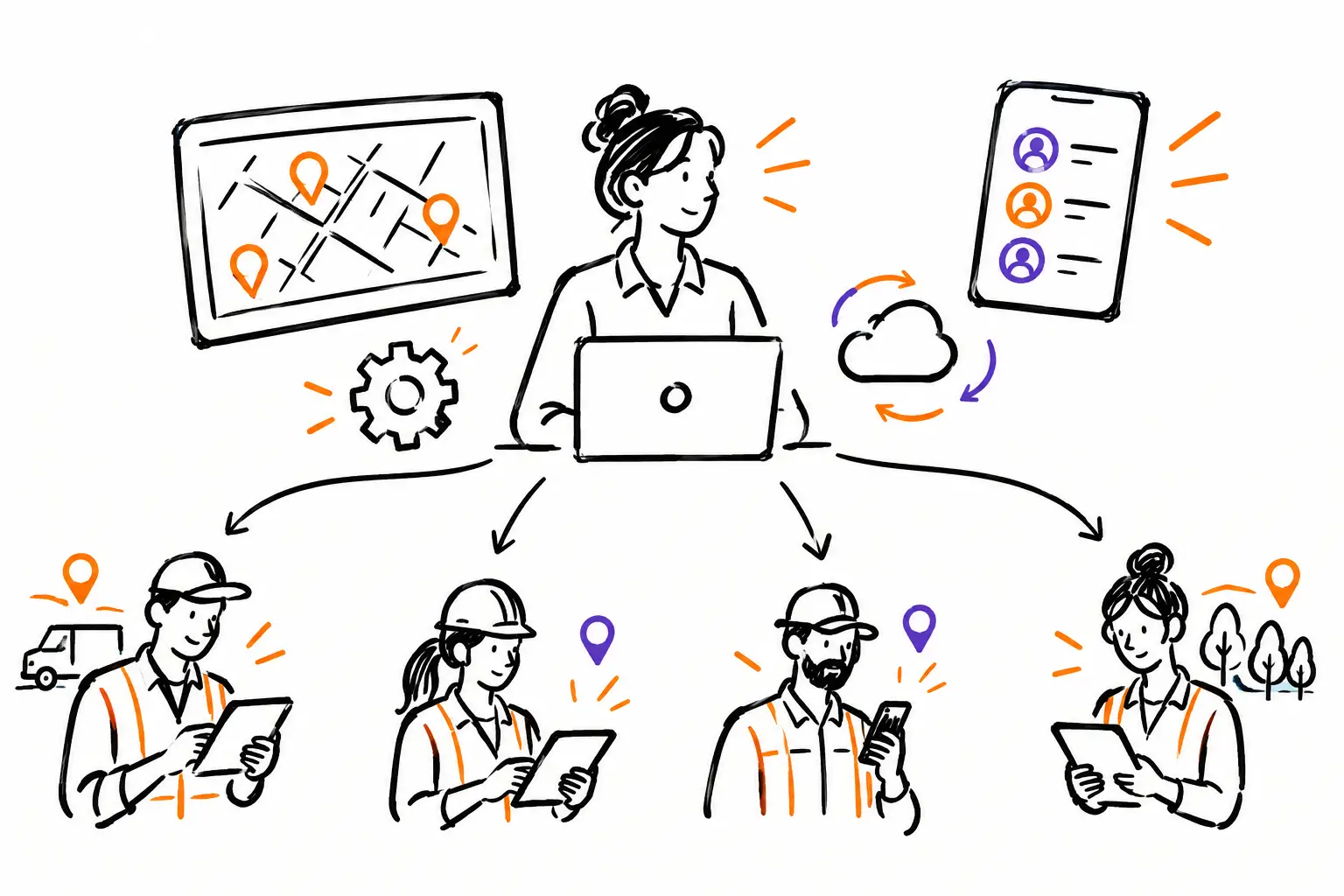
When a coordinator assigns a team to a job, they should also be able to reserve the machine, vehicle, specialized tool, or batch of materials required. Information shouldn't remain in a separate conversation. It should be attached to the work document that everyone is consulting.
This approach avoids two common mistakes. The first is planning a job without verifying the actual availability of the equipment. The second is noting usage after the fact, when details are already fuzzy. When equipment is associated with the work order from the planning stage, the field receives clear instructions and the office keeps an actionable record.
Create a useful record, not a heavy inventory
Every piece of equipment doesn't need a complex file. You should first capture data that actually helps in decision-making and action: its name or number, type, usual location, status, person responsible, maintenance dates, and, if necessary, its cost or billing rate.
A simple status is often enough: available, reserved, in use, in maintenance, or out of service. The important thing is that these statuses match the language used by your teams. If drivers talk about a "truck at the garage" and the system displays "active with restrictions," no one saves time.
You must also balance the level of detail. Tracking an excavator, a trailer, or a measuring device individually makes sense. Tracking every pair of gloves or every screw does not. Small consumables should instead be managed by quantity or minimum inventory levels. Precision should serve the operation, not add administrative tasks to the field.
Make movements visible without complicating the day
Equipment circulates between the warehouse, vehicles, job sites, workshops, and sometimes subcontractors. Without a record of these movements, the company ends up searching for things rather than doing billable work.
The solution isn't necessarily to impose a heavy process on every move. For certain expensive or critical equipment, assignment to a work order, accompanied by a mobile confirmation, is justified. For common tools, the team lead can perform a departure and return check. The right level of control depends on the value of the equipment, its mobility, and the cost of an error.
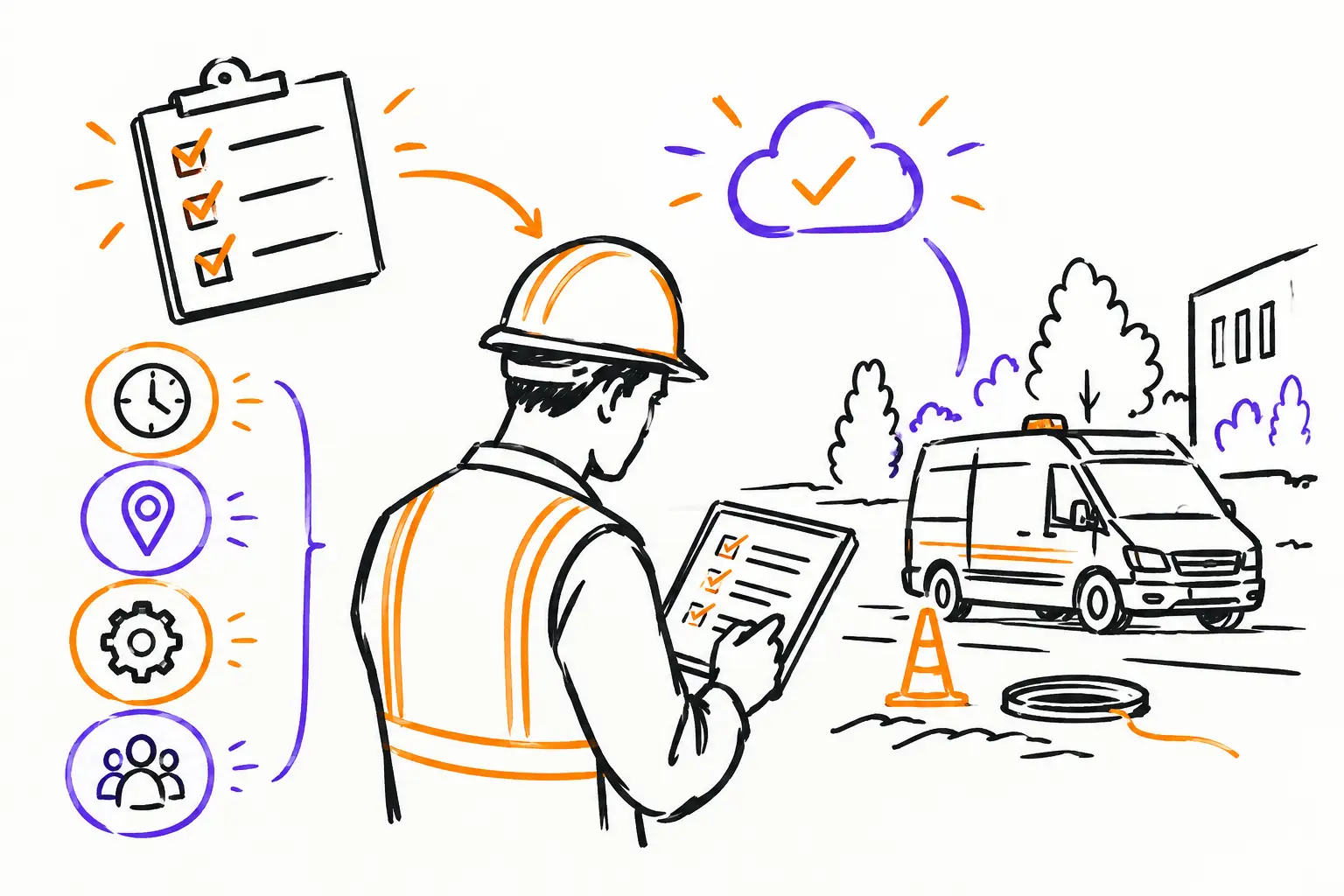
In the field, a photo can also resolve many discussions. A photo taken before and after the job documents the condition of equipment, an installation, or noted damage. It is much more useful when attached directly to the work order, with the date, client, and technician, rather than lost on an employee's phone.
Validations play the same role. The technician can confirm that a device was used, that equipment was handed over to the client, or that a machine needs to be taken out of service. The manager no longer has to reconstruct the story from incomplete messages.
Plan maintenance before the breakdown
Available equipment isn't necessarily ready to go. A machine might look free on the calendar but require an inspection, repair, or preventive maintenance. If this information isn't visible at the time of planning, the team discovers the problem too late.
Maintenance must therefore be part of the work documents, just like a client job. A periodic inspection, oil change, calibration, or repair becomes an assigned task with a person responsible, a deadline, and proof of execution.
For some assets, the trigger might be a date. For others, it is more relevant to link it to hours of use, mileage, or a number of jobs. A generator used every day isn't managed like a vehicle that is rarely driven. Your procedures must reflect this difference.
The gain is concrete: the coordinator avoids assigning non-compliant equipment, the shop manager sees what is coming up, and management can compare maintenance costs to replacement costs. This isn't paperwork. It's a way to reduce unplanned downtime and last-minute rentals.
Flow costs back to the invoice
Equipment management is often separated from billing. Yet, when a company mobilizes a boom lift, truck, pump, or specialized device at a client's site, this usage can be part of the service price.
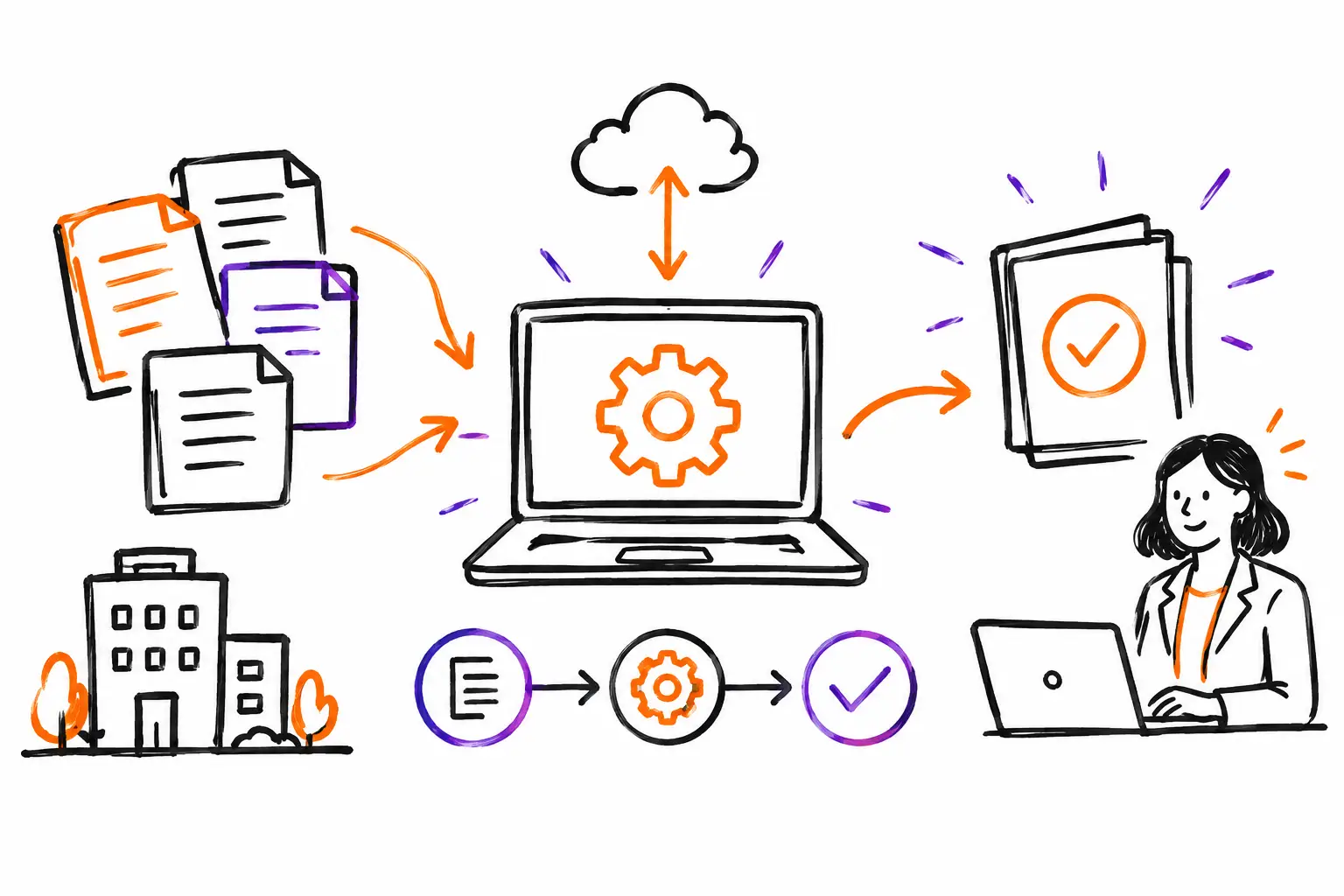
If the team records the equipment used directly in the work document, the office doesn't have to ask what was brought to the site. Hours, expenses, materials, and equipment fees are all in one place. The quote can then become a work order, and then an invoice, without double entry.
However, you must define a clear rule. Some equipment is included in your hourly rate. Others are billed by the day, hour, kilometer, or according to a contract clause. The system must respect your pricing method, not force you to apply a generic rate.
This traceability also helps when a client asks a question about an invoice. Instead of searching through emails, you can show the work performed, photos, validations, and the equipment actually used. The discussion becomes simpler because the file is complete.
Implement tracking that works in real life
A good process is deployed gradually. Start with the equipment that creates the most losses, delays, or costs: shared vehicles, specialized machines, expensive tools, and billable materials. Once habits are established, you can expand the tracking.
Here is a realistic sequence over a few weeks:
- List critical equipment and assign each a clear identifier.
- Define a maximum of five statuses, understood by both the office and the field.
- Add equipment assignment to your most frequent work orders.
- Create inspection, return, and maintenance procedures for high-risk assets.
- Check weekly for unused, under-repair, missing, or unbilled equipment.
In Sequentia, this logic can be adapted to your business document. A work order can contain tasks, assigned equipment, photos, time, expenses, and necessary validations, then feed the invoice and dashboards. Your teams don't have to juggle between an Excel sheet, text messages, and accounting software to reconstruct what happened.
The right system doesn't ask the field to become clerks. It gives every person a simple way to confirm actual work, at the moment it happens. This is how equipment stops being a source of searching and returns to what it should be: a way to deliver more work, faster, and with a better-protected margin.