A work order closed on Friday shouldn't become a pile of notes to decipher on Monday. Yet, in many companies, hours are in an Excel sheet, materials are in a text message, photos are on a phone, and the invoice is still waiting at the office. A well-thought-out SME accounting software integration transforms this journey into a logical sequence: work performed in the field feeds the client file, and then data ready for invoicing reaches accounting without double entry.
The goal is not to replace your workflow with a generic process. It is to circulate the right data between your teams, your working document, and your accounting software. For an SME in services, construction, maintenance, or property management, this difference is quickly visible: fewer oversights, faster invoicing, and a better understanding of what was actually done.
Why accounting integration often blocks SMEs
The problem rarely starts in the general ledger. It starts in the field. A technician completes a mandate, a foreman adds hours at the end of the week, a coordinator searches for client authorization in their emails. When this information is not gathered in the same file, the administration must reconstruct the story before invoicing.
This reconstruction costs time, but it also creates discrepancies. A billable expense may be forgotten. Overtime hours may never be added to the invoice. A client may dispute an amount because proof of execution is hard to find. Accounting then receives incomplete data, and the office must choose between delaying the invoice or correcting it later.
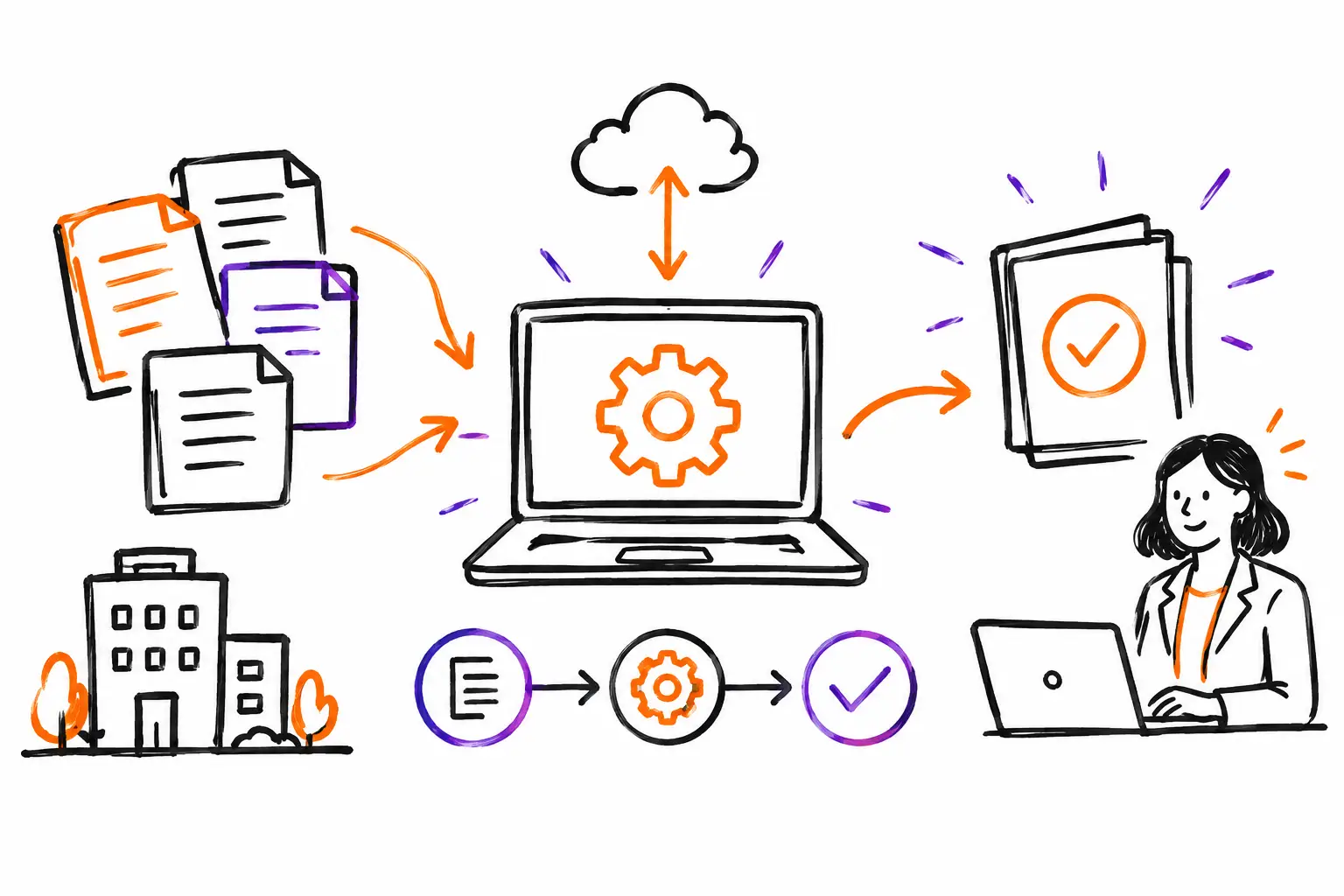
A good integration, therefore, does not just consist of sending an invoice from one system to another. It must link the steps that make that invoice defensible: the accepted quote, the work order, the tasks performed, the hours, the materials, the expenses, the approvals, and the attachments.
Start with the document that drives your teams
Before connecting two software programs, identify the document that actually organizes the activity. Depending on your trade, it could be a work order, a mandate, a service ticket, a project, or an intervention. Data must accumulate around this document.
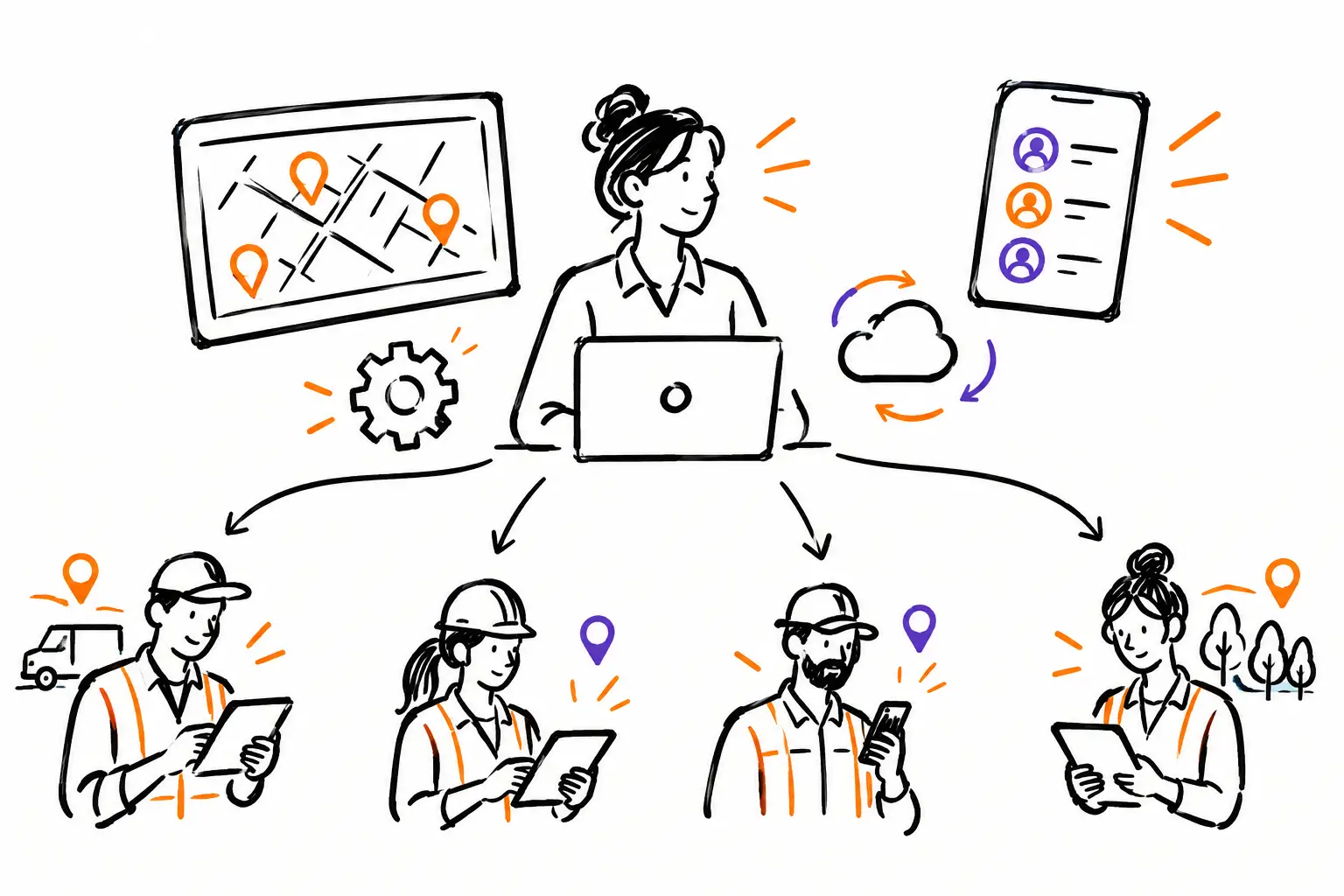
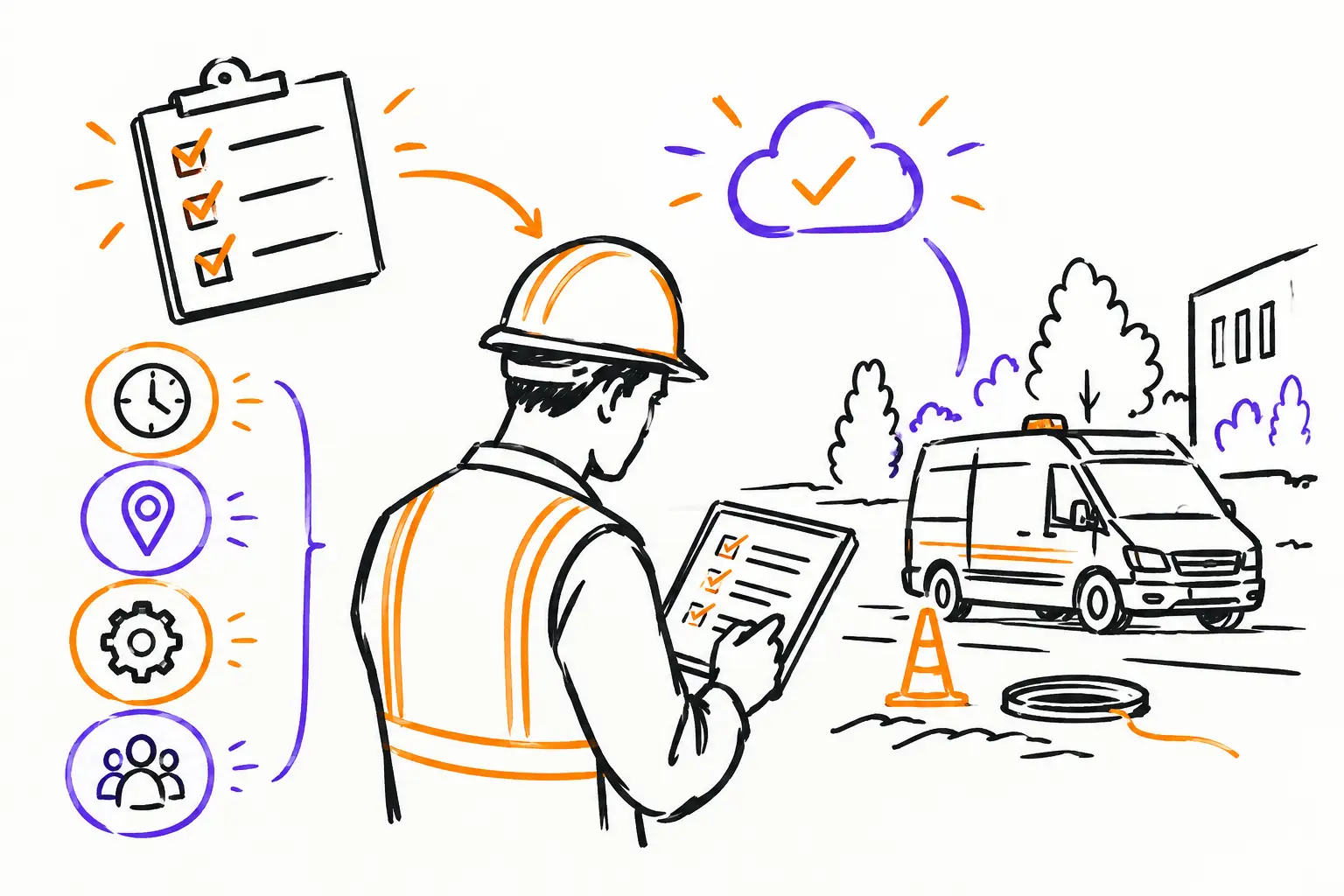
Let's take an equipment maintenance company. The coordinator creates a work order from a client request. The field team sees the procedures to follow, adds their hours, attaches photos, and indicates the parts used. Once the work is validated, the office can verify what is billable and produce the invoice from the already entered data.
This scenario seems simple, but it avoids several fragile handoffs. The team does not have to fill out a paper report to then send it by email. The person responsible for invoicing does not have to call the technician to confirm the number of hours. And accounting does not receive an invoice built from estimates or memories.
Data must be entered once, at the right time
Integration is useful when each piece of data has a clear source. Hours should come from time tracking or the timesheet. Materials should come from inventory, an expense, or a line added to the document. Taxes, payment terms, and client details must come from a controlled client file.
If the same data is entered in three places, the integration does not solve the problem: it moves it. Your team then risks comparing different amounts between the work order, the invoice, and the accounting software. The priority is to decide which tool is responsible for each piece of information, then avoid contradictory changes.
What should flow to accounting
Not all operational information needs to be transferred to the accounting software. Before-and-after photos, internal comments, and checklists have great value for service and traceability without necessarily needing to appear in accounting.
However, the data that makes up a transaction must be consistent. This includes the client, billing addresses, products or services, quantities, rates, taxes, discounts, billable expenses, and payment terms. Depending on your process, the quote number, work order number, or project number can also serve as a useful reference on the invoice.
In Quebec, tax management requires special attention. An invoice must apply the correct GST and QST rates according to the client, the type of sale, and your company's rules. You must also plan for less frequent cases: out-of-province clients, non-taxable items, deposits received before the work, or contractual holdbacks. An integration that works for the common scenario but fails as soon as a file is out of the ordinary creates a new layer of manual verification.
Define the direction of synchronization
The question is not just "can we connect the two software programs?" You must also ask in which direction the data should travel.
In many SMEs, client files and accounting parameters are maintained in the accounting software. The operational tool uses them to create work orders and invoices. In other cases, clients are created by the sales or dispatch team, then transmitted to accounting after validation.
Both approaches can work. The key is to choose a simple rule. For example: legal contact information and payment terms are managed by administration, while site contacts and intervention details are managed in the working document. Without this division, duplicate clients and invoicing errors return quickly.
Make the invoice the continuation of the work performed
The best test of an SME accounting software integration is concrete: after closing a work order, how many manual steps remain before sending the invoice? If someone still has to copy hours, search for expenses, and verify the parts used in three tools, the process deserves to be reviewed.
An effective workflow can follow this logic: a quote is accepted, it becomes a work document, teams add the elements actually performed, a manager validates the discrepancies, and then the invoice is prepared with the correct lines. Accounting receives a complete transaction, with the necessary references to track payments and taxes.
This does not mean that every invoice must go out automatically. For some contracts, administrative approval is essential, especially when work exceeds the authorized amount or when expenses must be re-invoiced. Automation should speed up repetitive tasks, not eliminate the controls that protect your margin.
Prepare your rules before the technical connection
A technical connection does not compensate for vague rules. Before deployment, take the time to answer very concrete questions: at what status does a work order become billable? Who can modify an hourly rate? How do we handle travel, a part provided by the client, or a non-billable expense? What do we do with an invoice canceled after it has been sent?
Also, document exceptions. This is often where teams return to emails and parallel files. A company that invoices at a fixed price does not manage the same discrepancies as a company that invoices time and materials. A team working on multiple sites for the same client may need to separate addresses, cost centers, or project numbers.
Sequentia can adapt to the business document that organizes your work, whether it is a mandate, a work order, or a project. This approach is particularly useful when your reality does not match the standard model of an invoicing software. Your methods are unique; your software should be too.
Deploy by scenario, not by big bang
To reduce risks, start with a frequent and easy-to-measure scenario. For example, service calls billed by time and materials. Run a few complete files from start to invoice, then verify the results with the field, coordination, and accounting teams.
Compare amounts, taxes, client references, and payment statuses. Also, measure the time elapsed between the end of the work and the issuance of the invoice. If the team has to bypass the process to handle a normal case, correct the workflow before extending the integration to all projects.
Training must follow everyone's role. The technician must understand what they need to record on their work order and why. The manager must be able to see documents blocked before invoicing. The administration must know what to validate before the accounting submission. A successful integration does not depend solely on the tool: it depends on simple actions, done consistently.
The right indicator is not the number of connected software programs. It is your ability to see finished work, find its proof, invoice the right amount, and know what remains to be collected. When the field and the office work from the same file, accounting ceases to be a catch-up step and becomes a real management lever.