A technician finishes a job, takes three photos, and notes the parts used. They send everything to a group text. Their hours stay on a sheet, the photos on their phone, and the invoice waits at the office. This is precisely where the choice between centralized management or dispersed tools ceases to be a software question: it becomes a question of margins, deadlines, and control.
For an SME in services, construction, maintenance, or project management, every incomplete handoff costs time. Lost information forces calls to the field. A late timesheet delays the invoice. A procedure not followed exposes the company to an avoidable error. The problem isn't that your teams lack tools. It's often that they have too many, without a common file to link real work to administration.
Dispersed tools: the hidden cost of small shortcuts
Dispersed tools are rarely the result of a bad decision. They accumulate as you grow: a spreadsheet for tracking, a messaging app for emergencies, a time-tracking app, a file space for photos, accounting software for invoices. Each meets a real need. Together, they create gray areas.
The coordinator must then reconstruct the history of a mandate. They search for the latest version of the quote, confirm if the client approved an addition, verify hours, request receipts, and compare information before billing. This work doesn't always appear in reports, but it consumes the end of days and months.
The field also experiences the consequences. When useful information is spread across several applications, teams work with what they have on hand. A missing address, a forgotten procedure, or client instructions transmitted too late. These aren't necessarily huge errors. But their repetition weakens the customer experience and reduces the company's ability to take on more mandates without adding management overhead.
The most costly risk remains double entry. An hour entered on paper, then in a spreadsheet, then in billing, can be misunderstood or simply omitted. A part used in the field might never make it onto the invoice. In the end, the company has performed the work but doesn't always have the data to monetize it quickly and correctly.
Centralized management or dispersed tools: the real difference
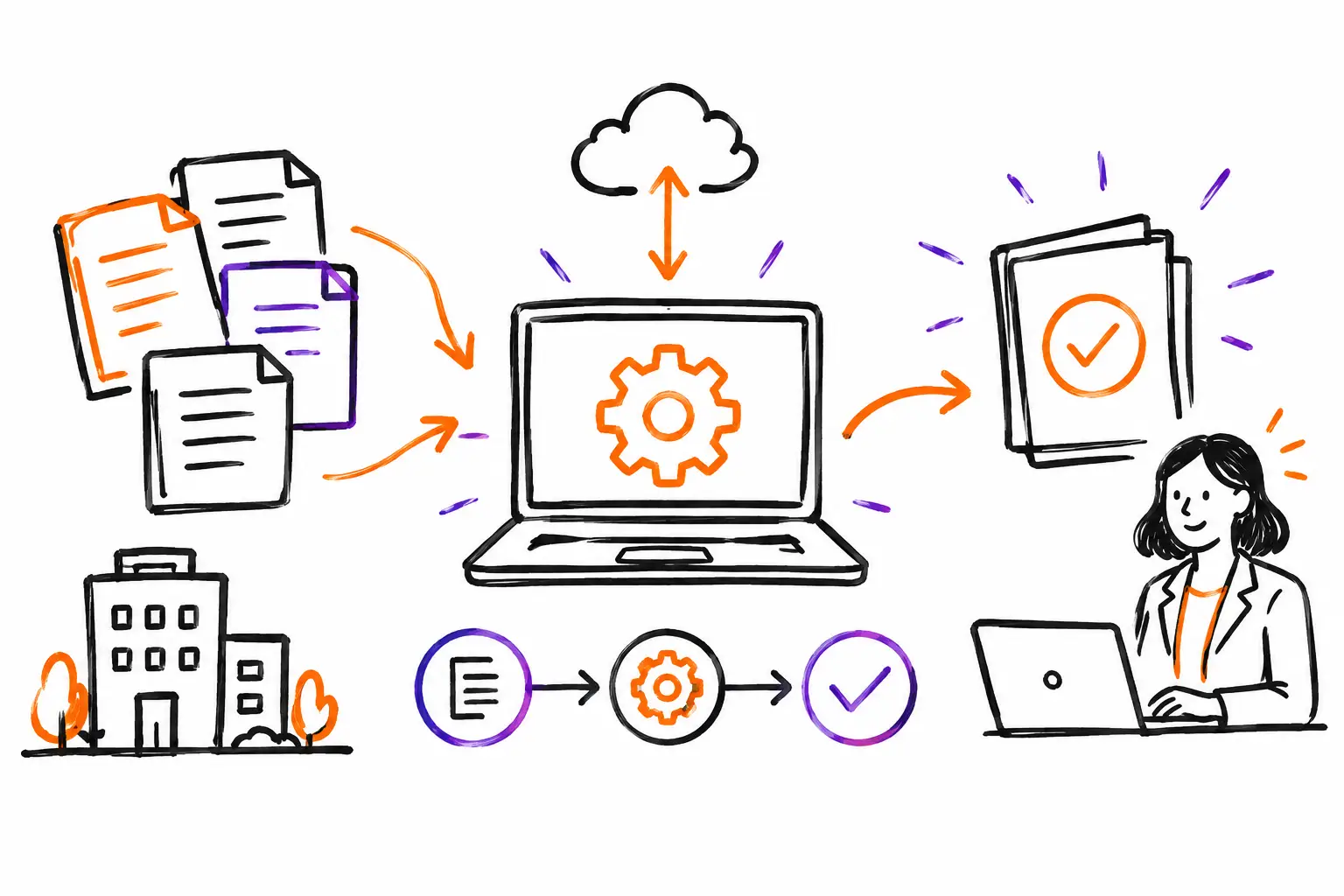
Centralized management does not mean putting all the company's software into a single box. An SME can keep its accounting software, specialized tools, or certain systems required by its clients. The deciding factor is elsewhere: every intervention, mandate, work order, ticket, or project must have a clear operational file.
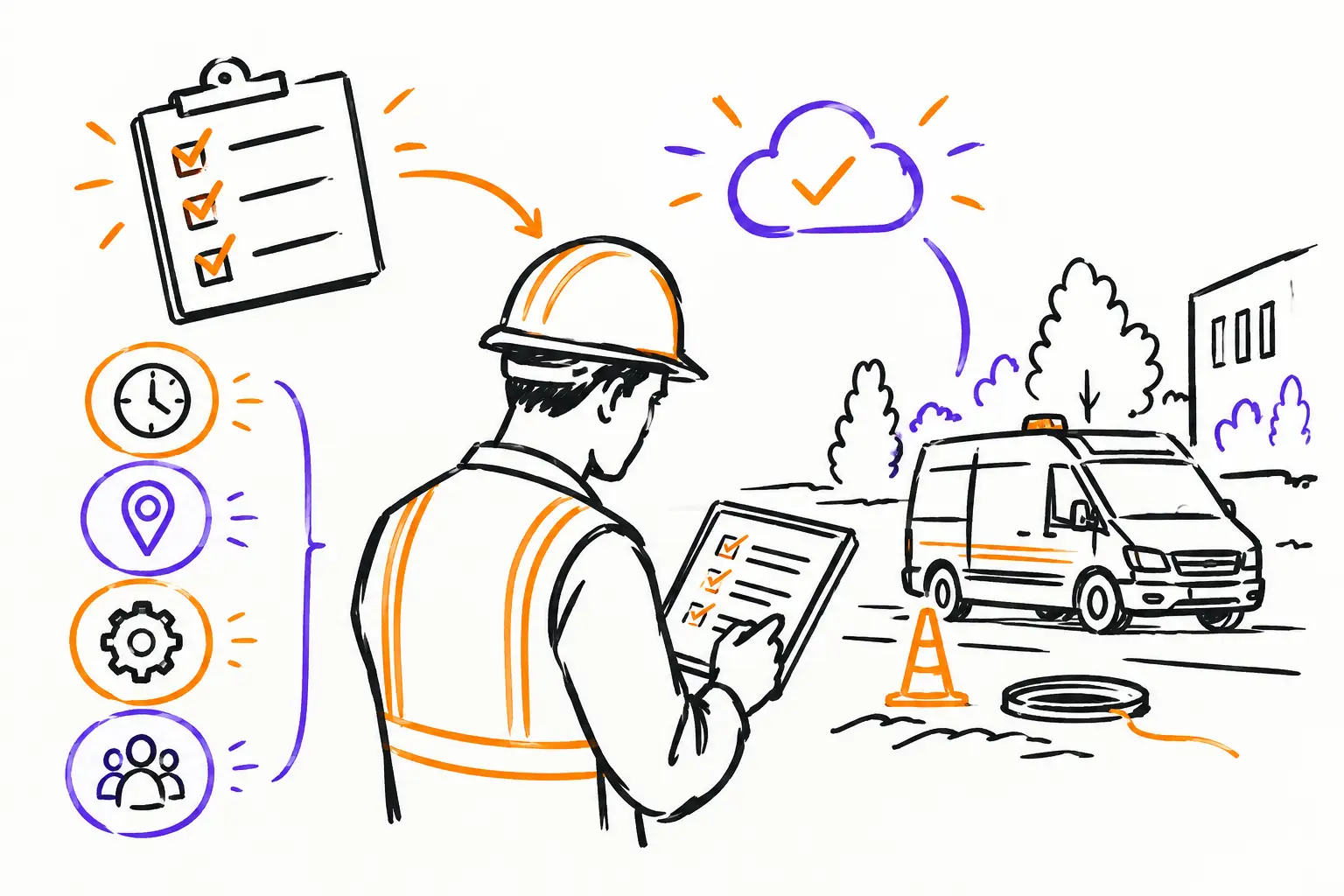
This document becomes the meeting point between the office and the field. It contains client contact details, tasks to be done, procedures, photos, communications, logged hours, expenses, parts or inventory used, as well as required validations. Information follows the work instead of circulating alongside it.
Take a maintenance company that receives an urgent request. The office creates a work order, assigns the technician, and adds access instructions. On-site, the technician consults the work order, checks off planned steps, adds before-and-after photos, notes their hours, and has the client sign if necessary. Upon return, the office doesn't start from scratch: the necessary data is already linked to the file and ready to be validated, then invoiced.
This difference seems simple. Yet, it transforms daily management. Instead of asking "Where is the information?", the manager can ask "What is blocking this file?". They see work in progress, documents awaiting signature, unapproved hours, and completed interventions ready for billing.
Centralizing without imposing a process that doesn't fit you
A common trap is believing you must choose between the chaos of separate tools and rigid software that forces the entire company to change its methods. This false choice holds back many SMEs, especially those whose operations have evolved with their clients, teams, and trade.
A good centralized system must respect the document that actually structures your work. For some, it's a work order. For others, it's a mandate, a service ticket, a preventive maintenance record, or a multi-stage project. The document must be able to reflect your vocabulary, your statuses, your fields, your validations, and your procedures.
An excavation company, for example, will not track its operations like a production agency. The former might want to link equipment, machinery hours, delivery slips, and material costs to a job site. The latter will need to track deliverables, client approvals, assignments, and production expenses. Centralizing therefore does not mean standardizing every trade into a generic model.
This is the document-centric approach that Sequentia favors: starting from your work document to link execution, tracking, and billing. Your methods are unique; your software should be too.
Results that count in the field and at the office
When the work file gathers information at the moment it is produced, the gains are concrete. Field teams know what to do and can prove what was done. The office obtains complete data without multiplying calls and follow-ups. Managers see actual activity rather than a version reconstructed several days later.
Billing accelerates significantly. The path becomes more direct: approved quote, executed work document, validated hours and expenses, invoice prepared from file data. There is obviously still an administrative validation to perform according to your rules, but it focuses on the work performed, not on searching for missing information.
Centralization also improves accountability. A precise status makes it possible to know if a work order is waiting for a part, an approval, a return visit, or an invoice. Dashboards are no longer just for producing a monthly report. They serve to act now: follow up with a client, reassign a resource, correct a timesheet, or invoice completed files.
When to keep certain specialized tools
Centralized management does not require abandoning everything that already works. If your accounting team masters their software or if a client imposes a specific portal, it may be better to keep them. The question is knowing where operational information originates and how it is transmitted without unnecessary re-entry.
Keep a specialized tool when it performs a specific task better and can integrate cleanly into the rest of your environment. Conversely, beware of applications that become the sole source of essential information without the work file keeping a record of it. A photo on a phone, an approval in an email, or an expense in a private message provides no visibility to the team that must deliver and invoice the service.
Before replacing anything, observe a normal week. Take a mandate from the first call to payment. Count the places where people enter, copy, request, or search for data. You will quickly see the handoffs that slow down your operations. Then start with the document that generates the most volume or the most friction, not the most theoretical process.
The right system shouldn't add a layer of management on top of the work. It should allow your teams to do their work, track it, and invoice it with the same information. When the field, the office, and billing are finally looking at the same file, days don't magically become longer. They simply become more useful.