A work order often begins with a hurried phone call, passes through a coordinator, is executed by a field team, and must then become an invoice. Between these steps, an SME can lose hours, photos, expenses, and sometimes even the track of what was promised to the client. Useful business management software does not just store information: it tracks actual work, from the first mandate to payment.
For companies in construction, maintenance, technical services, property management, or specialized projects, the problem is usually not a lack of tools. It is the accumulation: texts, emails, timesheets, Excel files, photo apps, and accounting software. Each tool covers part of the work, but no one has the complete file at the right time.
The true role of business management software
Business management software should give every person the right information to do their job, without asking them to search in five different places. At the office, the team must be able to plan, assign, and track. In the field, employees must know what to do, document what they have done, and report what changes. In administration, data must be ready to produce a quote, approve costs, and invoice.
The most concrete starting point is the work document. Depending on your trade, this could be a work order, a service ticket, a mandate, a project, or an intervention. This document becomes the living record of the operation. It contains the client, address, instructions, tasks, responsibilities, photos, hours, materials used, communications, and validations.
This logic changes how you manage. Rather than asking the team to copy the same information into multiple tools, you add the information once to the file where it will be useful. Time entered by the technician can be used for profitability tracking and invoicing. A photo taken before a repair can also protect the company in case of client questions. An on-site signature can confirm that the intervention was accepted.
From the field to the invoice, without incomplete handoffs
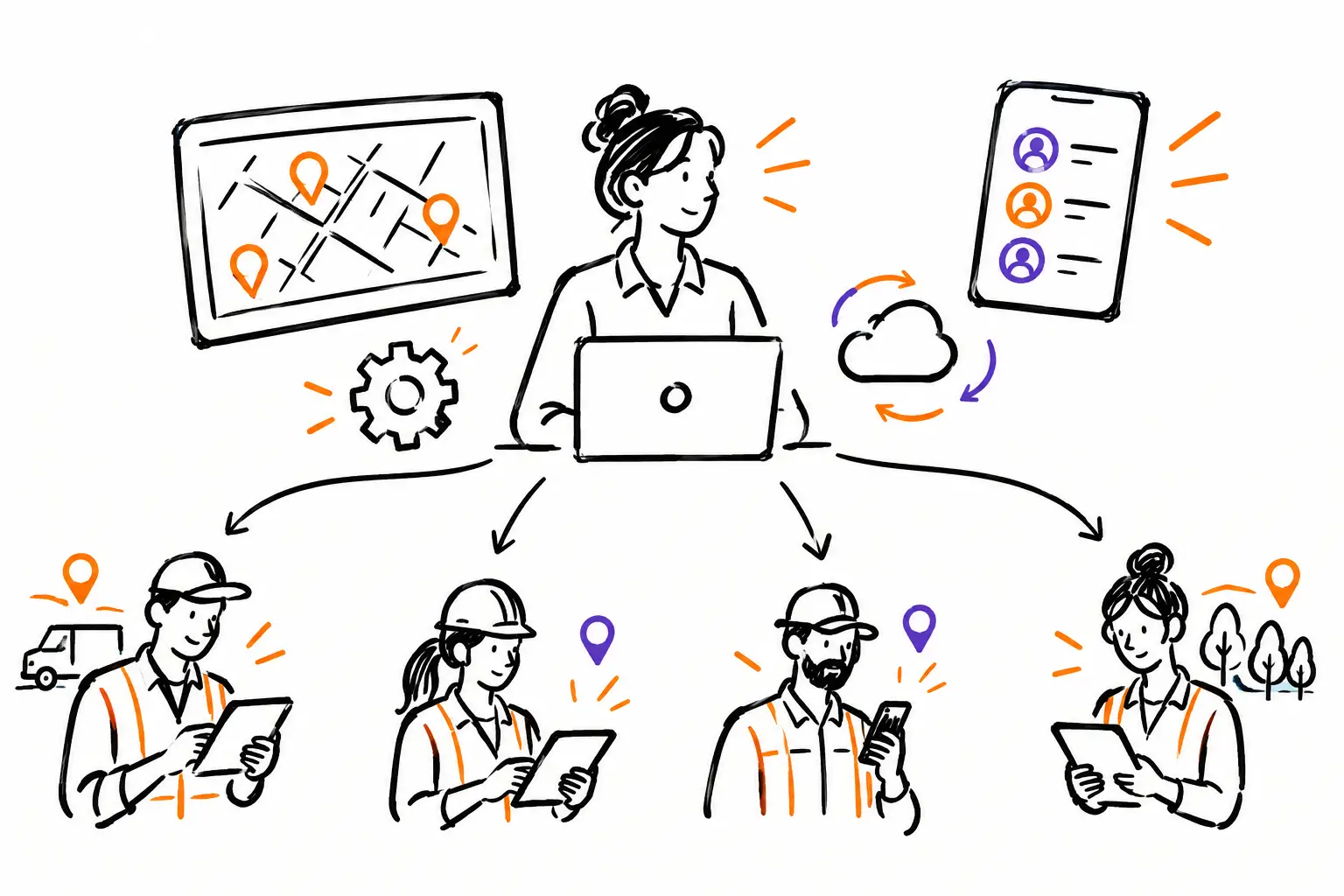
Take an equipment maintenance company. The client calls about a breakdown. The dispatcher creates a work order with the location, reported problem, and priority. They then assign a technician based on skills, availability, and travel zone.
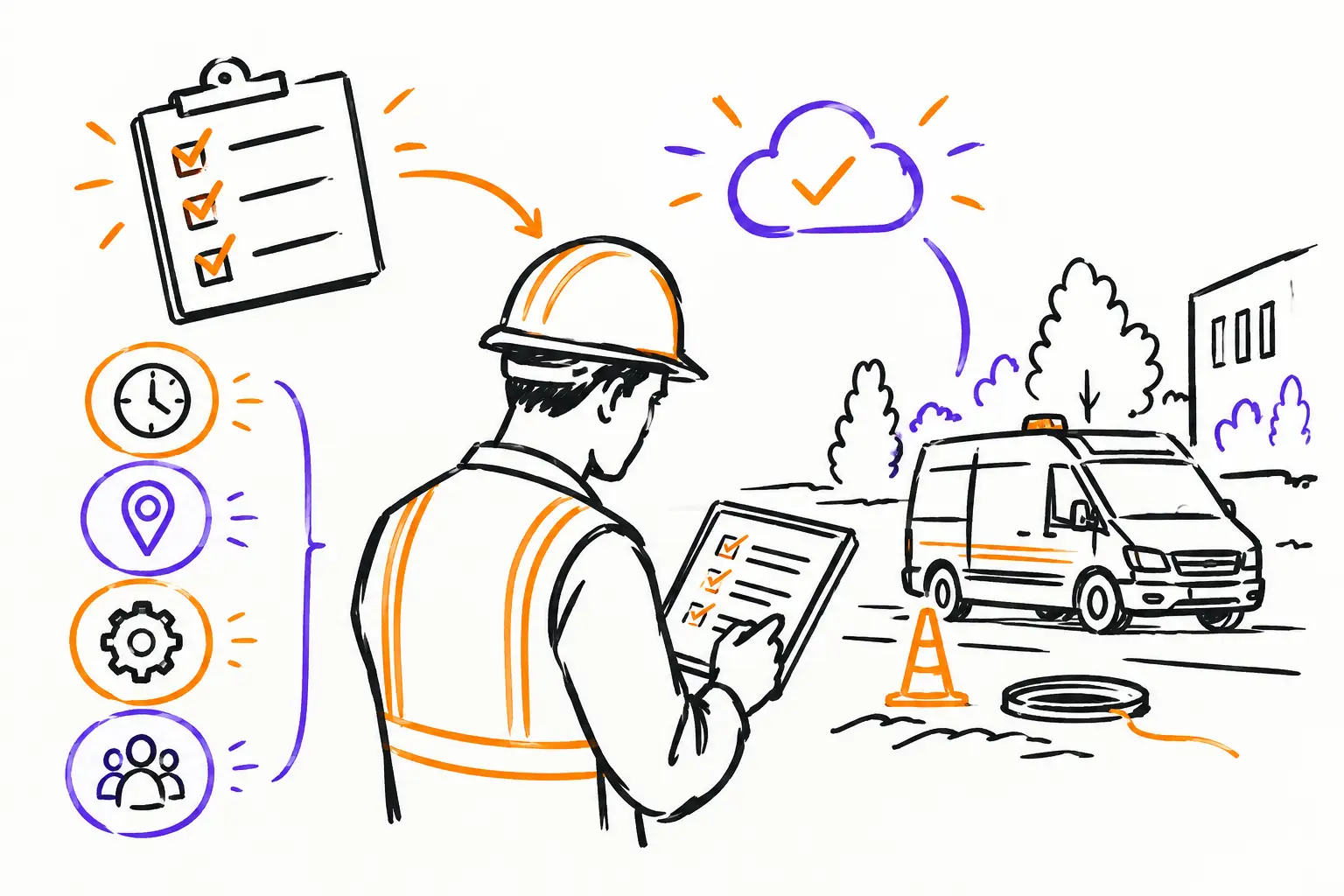
On their phone, the technician sees the mandate details and the procedure to follow. On-site, they add their hours, parts used, photos, and a note explaining the repair. If the problem requires authorization or an unforeseen part, they can report it directly to the file instead of leaving a vague message at the end of the day.
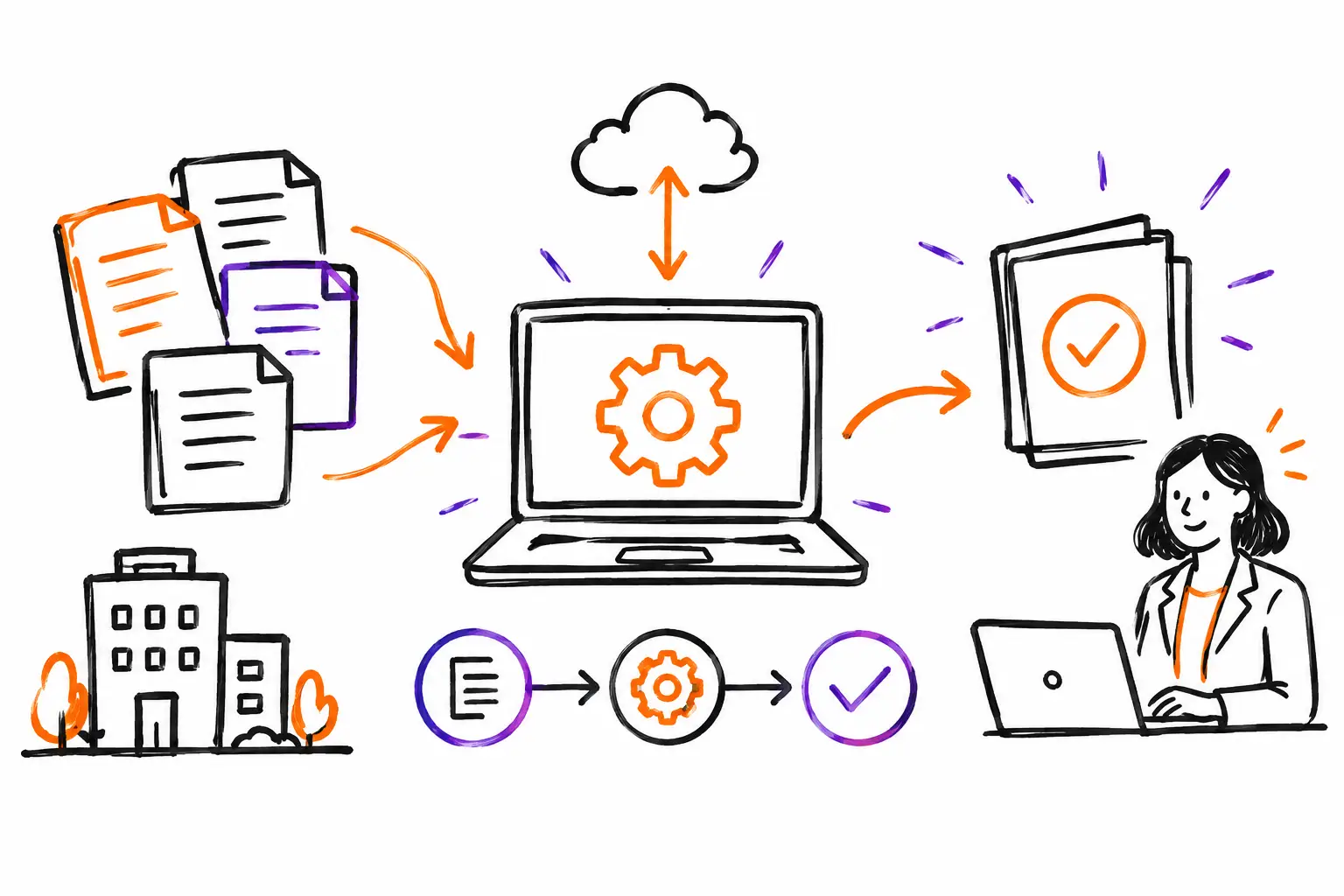
Once the work is finished, the office immediately sees what is billable. They do not have to wait for a paper timesheet, interpret a text, or call the technician to find out what "repair completed" means. The path becomes clear: quote, work document, execution, validation, invoice.
This is where the gain is measured. An invoice sent faster improves cash flow. An expense linked to the right file avoids oversights. Accurate hours provide a more credible picture of profitability. And when a client calls back three months later, the team can find the complete history without digging through email inboxes.
The features that really matter for an SME
The number of features displayed by a vendor does not say much. An SME does not need a decorative dashboard that adds a layer of management. It needs features that match its daily actions.
Planning must allow you to see upcoming work, delays, priorities, and team workload. If your employees travel, mobile access is essential. You must be able to consult a mandate, fill out a checklist, attach a photo, or record time in the field, even if the employee is not working in front of a computer.
Statuses are also more important than they seem. "To be planned," "assigned," "in progress," "waiting for parts," "ready to invoice," and "closed" are not just labels. They provide a quick reading of activity and prevent files from being forgotten between two people.
Procedures also have their place in good software. For an inspection, preventive maintenance, or installation, a checklist helps the team do the work consistently. It reduces discrepancies between employees, facilitates training, and provides proof that the required steps were taken.
Finally, the platform must link execution to the numbers. It is not enough to know that a mandate is finished. You need to know the hours invested, expenses incurred, materials consumed, amounts to be invoiced, and deviations from the initial quote.
Why generic software sometimes creates more work
A generic tool may suit a company whose activities are simple and repetitive. But as soon as the work involves exceptions, client validations, multiple teams, or specific business documents, the company often starts bypassing the software. It returns to Excel, texts, or paper forms to manage what the platform does not understand.
This workaround is expensive, even if it seems practical at the time. It creates a second version of the information. The coordinator does not see the same thing as the technician. The person invoicing must validate data elsewhere. The manager receives reports that are already outdated.
An effective system must therefore adapt to the document that actually structures your work, rather than forcing your team to adopt a flow that does not resemble your trade. An excavation company does not manage its operations like a production agency. A property maintenance team does not document its visits like a specialized workshop. Your methods are unique, and your software should be too.
Customization does not mean rebuilding everything every time. It means being able to adjust fields, statuses, forms, procedures, approval rules, and automations so they reflect your way of delivering service. You must maintain a common structure without erasing what makes up the operational reality of your company.
How to choose without buying another problem
Before comparing platforms, observe a real file from start to finish. Choose a recent mandate, ideally a bit complex, then note where information is created, transmitted, modified, and re-entered. You will quickly see the most costly time losses.
Then ask the vendor simple questions. Can a field employee complete their work from their phone? Do photos, hours, and expenses remain linked to the same file? Can you go from a quote to a work order, then to an invoice? Can managers see pending files without requesting a manual report? Can the system connect to your accounting tools or other platforms?
Also, ask to see your own scenario, not just a prepared demonstration. A vendor can show a beautiful interface in a few minutes. What matters is seeing how the software handles a last-minute change, an unforeseen expense, an incomplete intervention, or a delayed client approval.
Implementation must be progressive. Start with one document type or a pilot team. Clarify statuses, mandatory fields, and responsibilities before multiplying automations. The best rules are those that employees understand and apply naturally. A process that is too heavy will be bypassed, even if it is well thought out on paper.
Indicators that help you decide
When software gathers operational data in one place, dashboards finally become useful. A manager can see delayed work, unbilled mandates, hours per project, expenses exceeding the budget, or overloaded teams.
These numbers do not replace a manager's judgment. Instead, they allow you to act before the problem becomes costly. If a "pending" status accumulates, you need to know why. If hours often exceed the quoted amount, you need to review the estimate, the work method, or the conditions sold to the client.
At Sequentia, this approach starts with the work document rather than an imposed model. The goal is simple: circulate the right information between the field, the office, and billing, without double entry and without losing track of the work performed.
The right choice is not the software that promises to do everything. It is the one that helps your team do what they already do better, with fewer handoffs, fewer oversights, and files complete enough to act and invoice at the right time.