A technician finishes a job, takes three photos, gets the client's signature, and notes a part used. Yet, back at the office, this information sometimes arrives via text message, on a paper sheet, or remains in someone's head. Field digitization is primarily used to prevent this disconnect. Executed work must become actionable information as soon as it is completed, without forcing the administrative team to chase down details.
For an SME in services, construction, maintenance, or property management, the goal is not to replace paper with another layer of tools. It is about linking the work order to what is actually happening on the job site or at the client's location: tasks, hours, photos, validations, expenses, and parts. The expected result is simple: better coordination, better proof of work, and faster invoicing.
Field digitization is not limited to a mobile app
Giving an app to a field team does not automatically solve operational problems. If the data entered into the app must then be copied into a spreadsheet, accounting software, and emails, the re-entry remains. It has simply changed location.
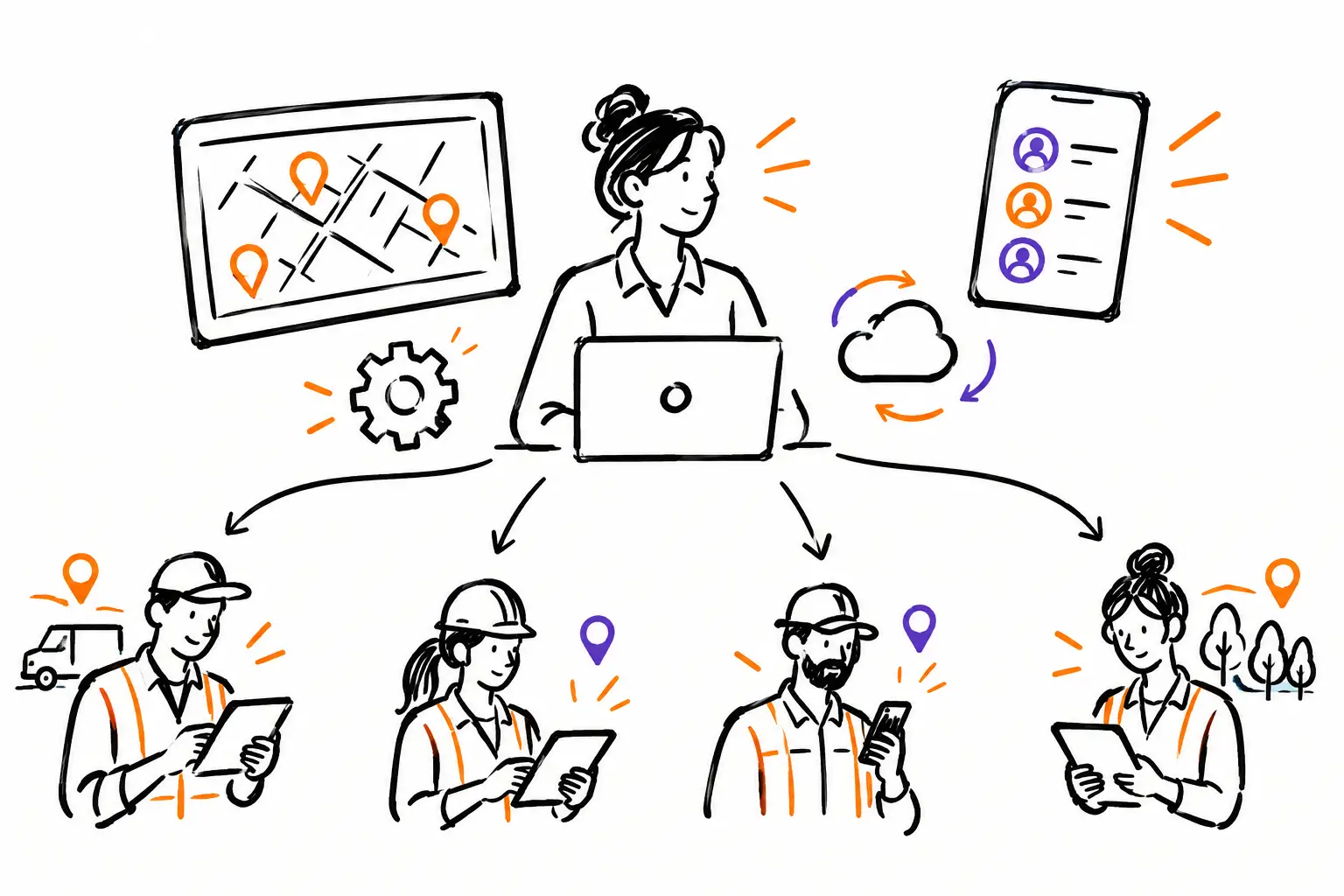
Useful field digitization creates continuity between execution and administration. When a worker opens their work order on mobile, they should see the correct instructions, address, useful documents, planned tasks, and client history. When they close it, the manager should be able to see what was done, what is missing, what needs to be invoiced, and what requires follow-up.
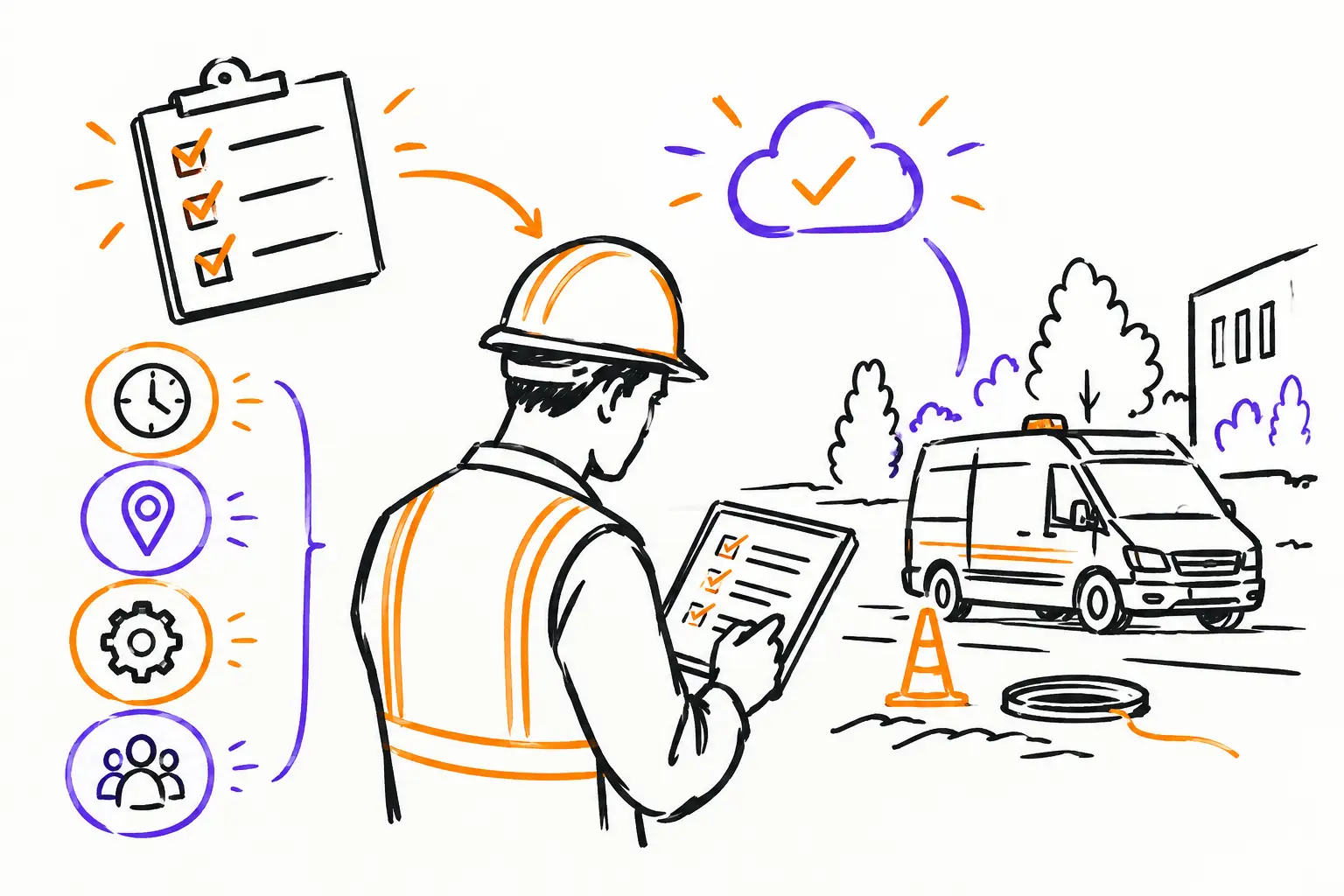
This continuity also brings rigor without burdening the field. A dated photo attached to a work order is better than an image lost in a conversation. An hour associated with a task is easier to validate than a timesheet submitted on Friday. A signature or an end-of-job status gives the office a concrete benchmark to initiate invoicing.
The right level of control, however, depends on the trade. An excavation team may need to document equipment hours and materials. A technical services company might instead require a checklist, serial numbers, and client approval. The software must follow the company's business document, not force the company to work as a generic model dictates.
Start with the document that drives your teams
The best starting point is rarely a large IT project. It is the document your teams already use to deliver their work: work order, mandate, service ticket, intervention report, or project file.
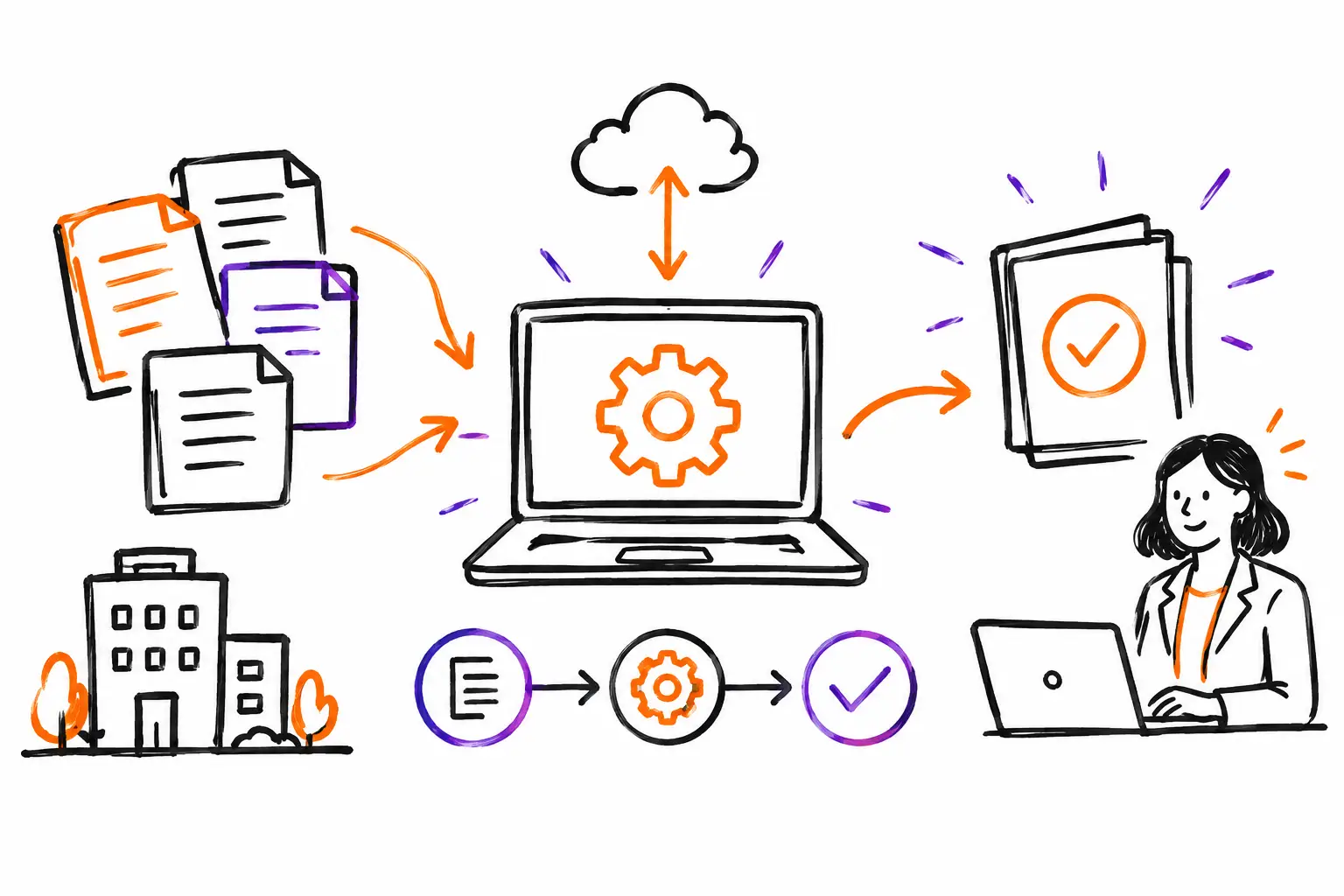
Let's take a common case. The project manager receives a request and prepares a quote. Once accepted, they create a work document with the client, site, tasks, deadlines, and planned resources. The field team receives this file on mobile, adds hours, photos, and unforeseen events, then completes the intervention. The office verifies missing elements and transforms the validated work into an invoice.
The path from quote → work document → invoice should not be identical for every company. Some invoice at a flat rate, others by time and materials, and others by project progress. The essential point is that information is entered only once, then reused where it is needed.
Before configuring anything, ask your teams a direct question: what information do you have to ask for twice today? The answers quickly reveal the areas to correct. It could be a rewritten address, late-transmitted hours, photos not associated with the right file, or parts consumed noted on paper.
Only capture what is truly useful
In the field, every requested field must have a clear reason. If the data is used neither to execute the work, nor to validate it, nor to invoice it, it risks becoming an irritation. A team adopts a tool more easily when they understand what they gain: fewer calls to find information, fewer forms to fill out after the fact, and fewer discussions about what was done.
A good mobile form is therefore precise but short. It can ask for a start and end time, time spent per task, before-and-after photos, a signature, an anomaly note, and parts used. Depending on the context, mandatory fields can prevent the closing of an incomplete work order. This prevents the coordinator from discovering, two weeks later, that the client authorization for invoicing is missing.
Exceptions must also be planned for. The technician must be able to report that access was impossible, a part was unavailable, or the client requested additional work. These deviations are not process defects: they are management information. When captured correctly, they allow for rescheduling, getting a supplement approved, or informing the client before the problem becomes a dispute.
Giving the office a view of real activity
The value of field digitization appears when the office stops waiting for the end of the week to know what happened. A dashboard can show work orders in progress, those completed, those awaiting validation, and those ready to be invoiced. The manager no longer searches through messages: they work from real statuses.
This visibility helps to act sooner. If an intervention takes twice the expected time, the manager can verify the cause before sending an erroneous invoice. If several tickets remain open for too long, they can reassign a resource or follow up with a client. If photos or signatures are missing, the office can request the missing items while the facts are still fresh.
Data quality also improves the client relationship. When a client calls to ask what was done, the team can find the right file, notes, visual evidence, and validations. This level of traceability is particularly useful for recurring work, multiple sites, and interventions where several people take turns.
Moving from entered hours to a defensible invoice
Invoicing faster is not just a matter of cash flow. It is also a way to reduce omissions. When a timesheet arrives late, expenses, materials, or overtime can disappear between the field and the office. Conversely, an invoice sent too quickly, without proof or validation, creates avoidable disputes.
The right balance is to define clear rules. A completed work order can move to pending validation. After verifying hours, parts, and the signature, it becomes billable. The data already present in the file then populates the invoice according to your company's rules: hourly rate, flat rate, travel, materials, holdbacks, or taxes.
This operation reduces double entry, but it does not replace human judgment. A complex intervention, a budget overrun, or a change in scope sometimes deserves a review by the project manager. The goal is not to invoice automatically at any cost. It is to reserve human time for files that truly require a decision.
Deploying without disrupting operations
An SME does not always have the luxury of interrupting its activity to change tools. Start with one type of work order, a pilot team, or a process that creates a lot of re-entry. Choose a visible case, for example, service interventions where billing depends on hours, photos, and parts.
Then, configure the document with the people who use it. The administrative manager knows what data is needed to invoice. The coordinator knows the statuses and exceptions. Field workers know what is realistic on a phone, with gloves, in a vehicle, or on a job site. This discussion avoids building a perfect form on paper that is painful to use on-site.
During the first few weeks, look at incomplete files rather than blaming users. Is a field poorly phrased? Is a step unnecessary? Do teams have access to the necessary information before leaving? Adoption often depends on small, very concrete adjustments.
A configurable platform like Sequentia allows you to match the digital document to your work methods, then evolve it as your procedures change. For an SME, this capability counts for more than a long list of unused features.
Measuring the gains that really matter
Do not limit tracking to the number of digital forms filled out. The right indicators are operational: time between the end of an intervention and its invoicing, rate of complete work orders, time spent following up with teams, gap between planned and actual time, or value of unbilled materials.
If these indicators improve, digitization is producing a real effect. If the field enters more information but the office continues to copy it, the flow still needs to be reviewed. The goal is not to accumulate data. It is to circulate reliable information from the client to the field, then from the field to the invoice.
Start with the next work order that risks getting lost between a truck and an email inbox. When every step of the work is attached to the same file, your teams spend less time reconstructing the past and more time delivering the next mandate.